The Yoga Teacher Leads the Women in Camatkarasana In the Time of Fetal Heartbeat Bills
Nothing is born and nothing dies, she says.
Wheels of light keep spinning, circles
of energy that turn through the spine.
As you arch the back from root to crown,
cinch the energy with your rad corsets–
light your abdomen and lumbar from within. Indigo waves pulse at my third eye, in sync with Tibetan bowls and gongs sounding in the background, a flashpoint of understanding, a head rush. Ground your feet, she says,
shine your heart toward the sky, extend
one arm to the clouds. You’re wild things,
wheels of astonishment glittering in the sun
***
This is a poem of resistance in the face of State efforts to curtail women’s rights over their own bodies. I wrote it when this bill was passed in Georgia and elsewhere, and although a judge has placed an injunction on applying this law in Georgia until the case is settled, another case in LA is heading to the Supreme Court. It’s hard to stay focused on each limitation, each attempt to oppress the people, so in this poem, I focus on internal liberation, available to each one of us.
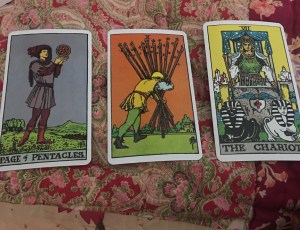
Tarot Card Spread from a prompt at Pretty Owl Poetry
Pretty Owl Poetry is calling for submissions of poetry prompts based on the Tarot. I decided to write a poem based on their prompt, but going forward, I might try my hand at an original prompt.
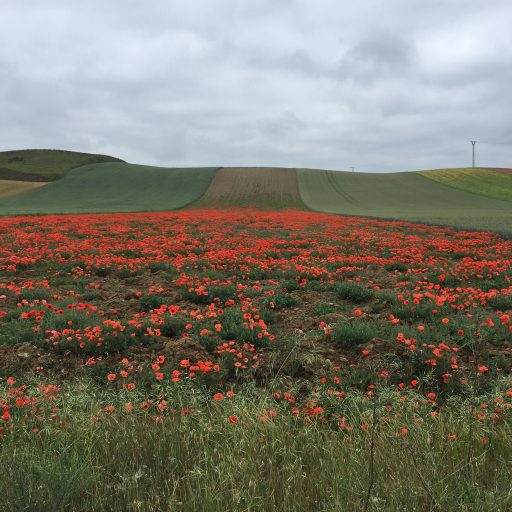
[The Camino Spills Across the Highlands]
The Camino spills across the highland
after crossing Basque Country mountains.
Poppies constellate gilded barley fields,
blood-red blossoms fibrillating like hearts
against the sky. So close to the sun here.
The astonishment of flower-comets
wilts with the heat, the weight of all the miles,
if I can remember the way home, no map
but the riddles spelled in the stars.
Process:
I didn’t look up the traditional meaning behind the cards, but tried to intuit the actions in each one and told a little story that the cards reflected to me.
I’m in the middle of writing a collection of poems about a pilgrimage I took to Santiago de Compostela in Spain, so when I saw the Page of Pentacles, my mind went to the moors in Spain and the delight of seeing the poppies in the fields.
The words in boldface come from Kimberly’s prompt. The words in italics are my impressions of the cards.
1.Mind of the poem, Page of Pentacles: awe and childlike or youthful curiosity at the beginning of a journey. Finding a treasure in a field.
2.Structure (body)– The Ten of Wands: The burden of gathering all ten wands, leaning into the labor, struggling against the work. The poem is bunched together in ten lines of ten syllables each to reflect the number ten and also the bunched up wands the man is carrying.
3.Spirit— The Chariot: The future is an enigma (Sphinx) that draws the chariot. The stars above are his only guide. He is a messenger of the gods (caduceus, symbol of Hermes). He’s leaving the comforts of home behind, unafraid.
His essay about invention (titled “Invention”) and how writing poetry was how he confronted the panic of possible death has also inspired me to write every day. Poetry is a means of survival.
I’ve been trying to write at least some lines of poetry every day as a challenge to extract myself from the mini-depression I went through this winter.
Winter was dark, rainy, muddy. Even in March, depression clung to me, like sticky hands holding me down.
When the sticky webs started to feel like a cocoon, I understood on a more personal level TS Eliot’s opening lines in The Waste Land:
April is the cruellest month, breeding
Lilacs out of the dead land, mixing
Memory and desire, stirring
Dull roots with spring rain.
Winter kept us warm, covering
Earth in forgetful snow, feeding
A little life with dried tubers
To cope with the intense melancholy and anxiety, I started thinking of the time between winter solstice and spring equinox as a period of germination.
I was a seed in protective darkness, no need for the light, even if I did crave sunlight and walked my dog whenever the sun was out, no matter how cold.
Once the clocks changed and the days grew longer in March, I wasn’t ready to emerge from the safety of my protective shell, the haven of my bed, the soft armchair, the warm kitchen and the making of soups.
Even though I’ve taken the semester off from teaching, an unpaid sabbatical so to speak since I’m an adjunct professor, I haven’t been working on my manuscript about my travels in Spain.
The stickiness is still there, but the fire is returning. I’ve been writing new, unrelated poems to revitalize my creativity.
Jericho Brown’s “Duplex” series and the form he has invented (read them in his new book!) have opened up more pathways for me and others. He is a true bard, an oracular young poet who keeps astounding the world with his human songs.
I also realize that it’s somewhat problematic that I’m using Jericho Brown’s wholly original poetic form because I am a white woman. I’ve lived a protected life. As Brown says about his form,
In his essay he goes on to describe his process, explaining that his duplex form carries traces of the ghazal, the sonnet, and the blues. That the couplets grew from lines he had written and saved from as long as fifteen years ago.
What I want to make clear is that I’m writing in Jericho Brown’s form because I find it beautiful and musical, but I won’t try to profit from his inventions in any way, such as trying to publish a duplex in a poetry journal.
Here are my two attempts at the duplex, written over the last two days:
Everyday Mysticism
I walk to where the creek water pools
To see the smooth darkness of its surface
To see the smooth darkness of its surface
Is to behold a circle with no circumference
This circle with no circumference contains
A benevolent silence, a suspension of time
This benevolent silence, this suspension of time
Is what I’m seeking when I’m alone on the trail.
When I’m alone on the trail, the dark water
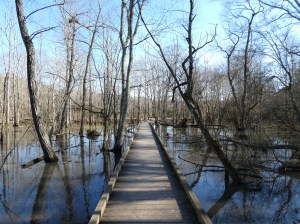
Stills, impenetrable, until I peer over the bridge
Peering over the bridge, a carnation tree weeps
Its petals onto the glassy skin of the creek
The pink petals fracture the surface–a mosaic–
My reflection where the creek water pools
***
I See Hawks
This day is a glass fishing float
Suspended in a net of clouds
Suspended in a net of clouds,
mineral smells of the river
In the mineral smells of the river
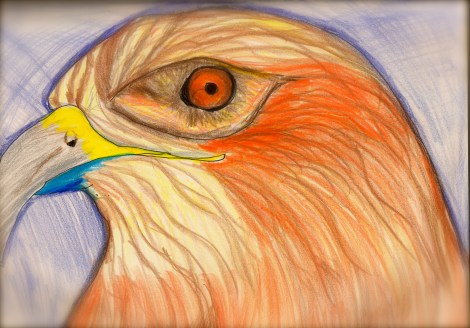
A hawk appears again. I’m tired
Of hawk sightings. I’m tired
Of omens, of signs that point to what?
Harbingers that point to what
I won’t fathom. A poem should have words
To fathom this–this net that suspends
The world, this day floating in blue glass
When I heard the rustling and scratching of animals in the wall cavity near my bed, I thought of this poem I wrote several years ago, originally published in MockingHeart Review:
For My Therapist, After the Diagnosis
I’m writing you these lines to say goodbye before you forget you ever knew me. Under the eaves, a house wren trills its cry. In the morning, it wakes me from those dreams where you’ve forgotten you ever knew me. Birds whirl around your room, and then you die. In the morning, they wake me from those dreams of needing you to teach me how to fly. Birds whirl around your room, and then you die, even though you’ve swept them from the roof beams out the window. Birds have taught you to fly through this world, stitched with invisible seams. Even though you’ve swept me from your roof beams, I come to ask you where you’ve gone and why this world is stitched with invisible seams. You wake, then forget, leaving threads untied. Once more I ask you where you’ve gone and why. Under the eaves, a house wren trills a cry that wakes me from these threads I can’t untie. Dear friend, I’m here again to say goodbye.
***
One of the last times I met with my therapist, a beautiful elderly woman who became like a mother to me, she was seeing clients in a home office. She had suffered a car accident, and she thought the accident was contributing to her memory loss.
That day in her office a bird flew into an adjoining room, so Joanne (a made up name to protect her privacy), got a broom and swept it through the open springtime window.
Around the same time period, we had a bird’s nest near our bedroom window, probably a wren, hence this poem.
I thought of Joanne the other day after reading Robert McFarland’s “word of the day” post on Twitter:
He asked readers to share someone who has acted as a mentor in our lives, and aside from a few excellent poetry teachers, Joanne’s spirit came to my heart-mind.
When she sold her house and moved to an assisted living home, she stopped seeing clients, of course. And I was bereft, not in the way I was when my father died, but a long, slow, heartache that still hasn’t quite healed.
Now we have another nest in the wall, but this time, it’s a squirrel. We have a wildlife management company working on relocating the animals, and we’ve sealed up the hole, but there are tin patches that we’ll need to replace with new siding once the weather warms.
Joanne was the first person in my life who reflected my own spiritual beauty and worth back on me. She taught me to show compassion for myself, to value my inner hopes and dreams. I will always be grateful for her guidance.
I can’t replace the void that Joanne’s illness left in my life. Since her retirement, I haven’t found a therapist who relates to me the way Joanne did.
My mentor is my inner guide, my own true nature, often elusive. To connect with my inner voice requires patience, stillness, faith, and hope.
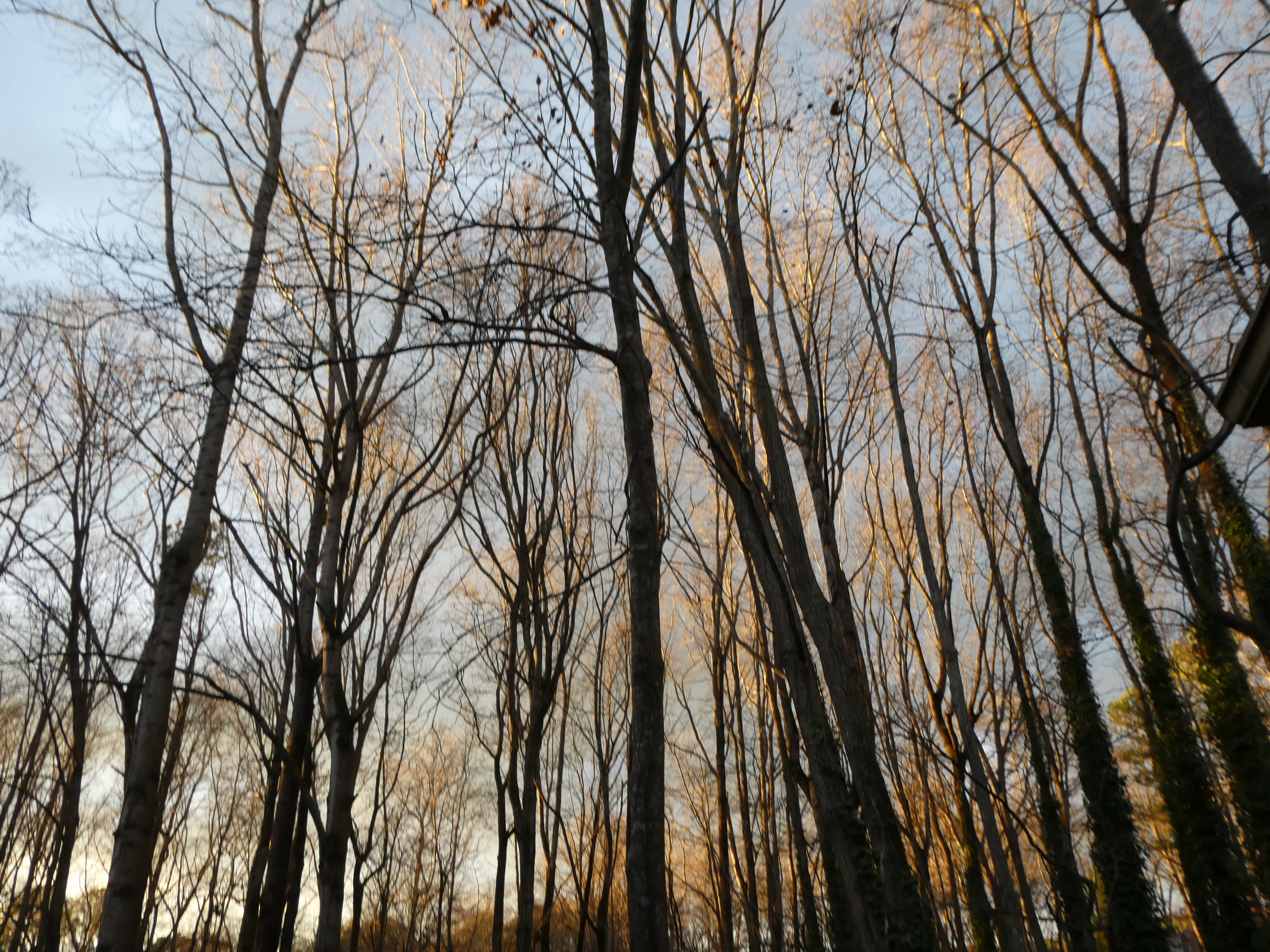
Gold light on trees, December 2018, @christineswint
For six months we drove to the clinic every day–
infusions to cleanse his septic blood.
Sometimes we’d stop for coffee along the way,
and I’d try to go inside the shop alone,
but he’d insist, he could walk on his own,
so I’d help him out the passenger seat and we’d shuffle
into QuickTrip, get donuts, too, then trudge
toward the clinic for the cure, a dose a day,
antibiotics for his heart that wouldn’t heal on its own.
He refused surgeries, transfusions of blood.
He even drove to church to do his prayer shift, alone
at two AM, a 24/7 adoration of the Virgin, his way
to ease the shame, I guess, maybe for his wayward
youth, he didn’t say. I’d chide him as we stepped
from car to curb, tell him not to drive alone,
to let the others pray for him this time, a daily
vision of healthy cells washing his blood.
Always the father, he never did listen or own
his eldest daughter had some sense of her own.
On these drives we’d talk politics and the way
the country was heading, the bad blood,
the fear one candidate stoked, but walking
was painful, and he grew weaker by the day.
He watched the news from his recliner when he was alone,
but he didn’t live to hear the words I alone
can fix it. He believed what he saw with his own
two eyes on cable news, the lies they spun every day.
He wouldn’t have it when I said propaganda was their way.
I tried to show him how they twisted the truth, stomped
all over the facts. But his kidneys were failing, his blood
ever thinner. In the end, all that mattered was blood
relations, forgiveness, love. In hospice, I left him alone
the night before he died. Still thought he’d walk
out of that place. The nurse said he was afraid on his own
in the dark. Even with opiates, he couldn’t find a way to sleep.
He asked for me. I drove right over. He stopped breathing that day.
There was a blood moon, auger of end times, in the days
before his death, a lone orb pointing the way,
an opening of sorts, a door for him to slip through, quite easily, on his own.
***
I wrote this poem last year and was thinking of including it as part of a manuscript I’m working on, but it doesn’t quite fit the project.
My father died in the spring of 2016, right after the Republican primaries. He was still following politics up until maybe the last month of his life. When the primaries came around, he was too sick to think about voting.
He watched cable news quite a bit when his decline set in, although he read a lot, too. When I told him that Fox News was biased and prone to hyperbole if not outright lies, he downplayed it and said, “Oh, they can’t do that, they have to report the facts.”
My father was an old school, corporate conservative who saw the Republican Party as the party of wealth and prosperity. His parents, my grandparents, were blue collar union workers from PA who always voted Democrat.
I think he wanted to be different from his father, who did not receive any schooling after eighth grade.
Whenever I think of the word “NaPoWriMo” I confuse the write part with rhyme. I hear it as NaPoRhyme–O. I would like to get rid of the National part of this abbreviated term, because the word national has taken on sinister connotations in the era we are now living in. Poet Dave Bonta calls it “(Inter-) National Poetry Month,” which I find much more inclusive and holistic.
In the spirit of my rhyme-O confusion, I’m continuing my just-for-the-fun-of-it rhyme scheme, trying not to censor myself. Here are today’s eight lines, still following the ABACCBCA scheme:
4.
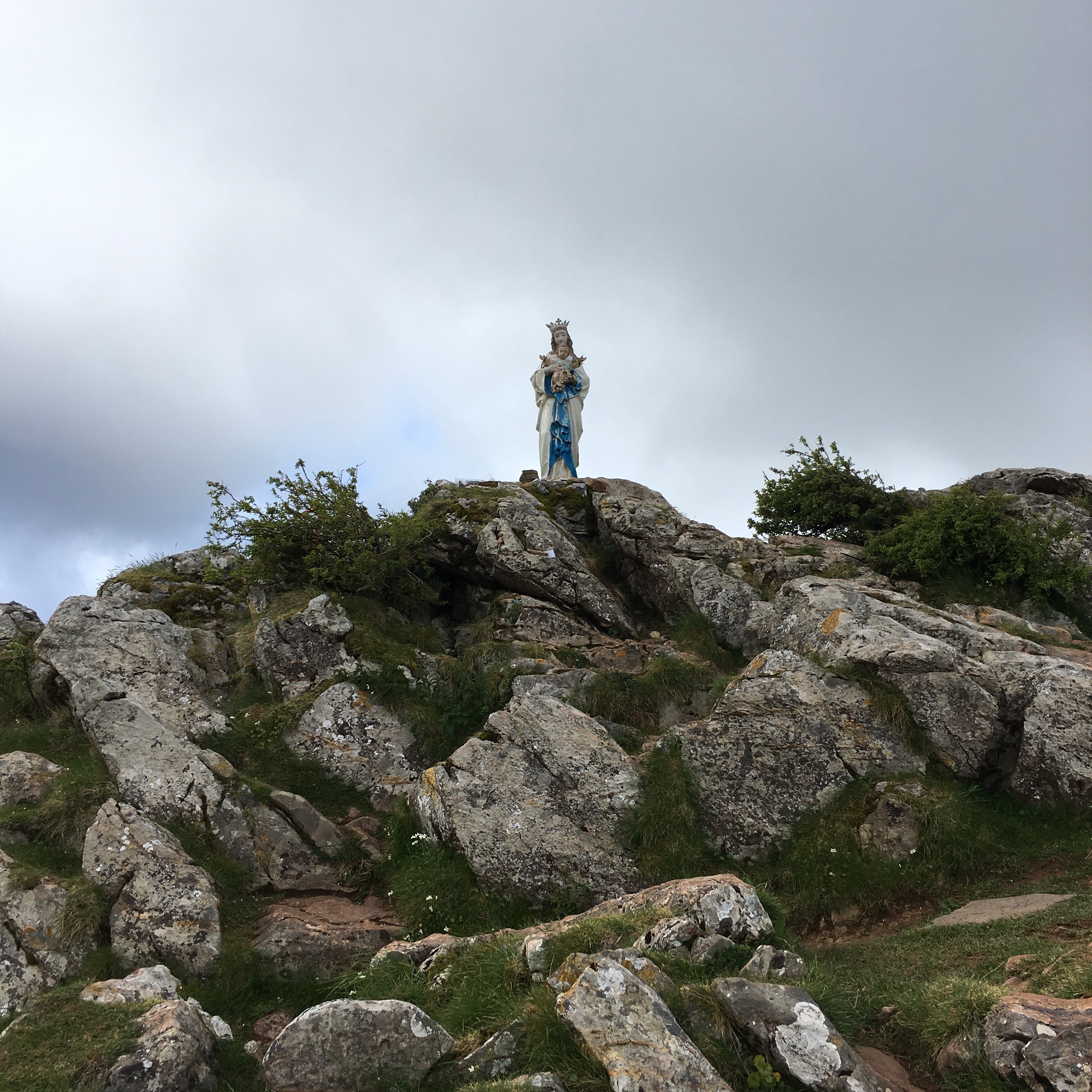
Today I found the plaster Virgin with Child,
Her mountaintop avatar wound with plastic rosary beads
Left in offering. Gentle Jesus, meek and mild,
My father taught me to pray, but the incantations didn’t stick,
Maybe because of the good swift kick
He said I needed, and then gave, seeds
Of my future rebellions– Wiccan symbols, Celtic
Knots I traced in the dirt at Mary’s feet, the wind wild.
If you want to read the first three stanzas, go here and here.
The setting of this journey poem is the Camino de Santiago in the Pyrenees.
Dear Cosmos, Dear Gaia, Dear Aliens on Earth,
Something-there-is that doesn’t love a woman,
Something-there-is that doesn’t love a child
Something-there-is that doesn’t love a protest
Something-there-is that doesn’t love this wall of words.
Something-there-is that doesn’t love.
Grazing each other’s beards to kiss, my brothers’ love
makes quiver the mouths of phobic Earthlings.
Something-there-is piles on lies to wall themselves in.
Something-there-is loathes a woman’s
blood, her milk, her wide hips, her breasts bared in protest.
Something-there-is refuses the Syrian child
washed ashore, his cheek turned to one side, as if in child’s
pose, his death not stark enough to awaken love.
Something-there-is throws grenades on protesters,
Native Americans circled in prayer who touch the Earth,
who protect the water that sustains our life. Women
are the watery portals we all pass through, a porous wall
we penetrate from one life to the next. No brick wall
mortared with hatred us can contain our childlike
trust that “no lie will live forever.” Women’s
rights are human rights, but not unless we love
our blackness, the origin of humans on Earth.
Something-there-is cages black bodies, protests
Black bodies, stops, frisks, gasses Black protests,
beats and murders black bodies behind cell walls.
How much of our comfort will we risk to free the earth
from this machine of distortion? Will our children
forget the sky once reflected blue before we love
the planet enough to disobey the spray-tanned man?
His rattling Tic Tacs warn men and women
to flee the fetid breath no mint can mask. We protest
his code orange stink by committing ourselves to loving
even those who sting our eyes with pepper. The only wall
that divides us is made of fear and lives in us. A child’s
mind, a pure mind, is the force that binds us on this earth.
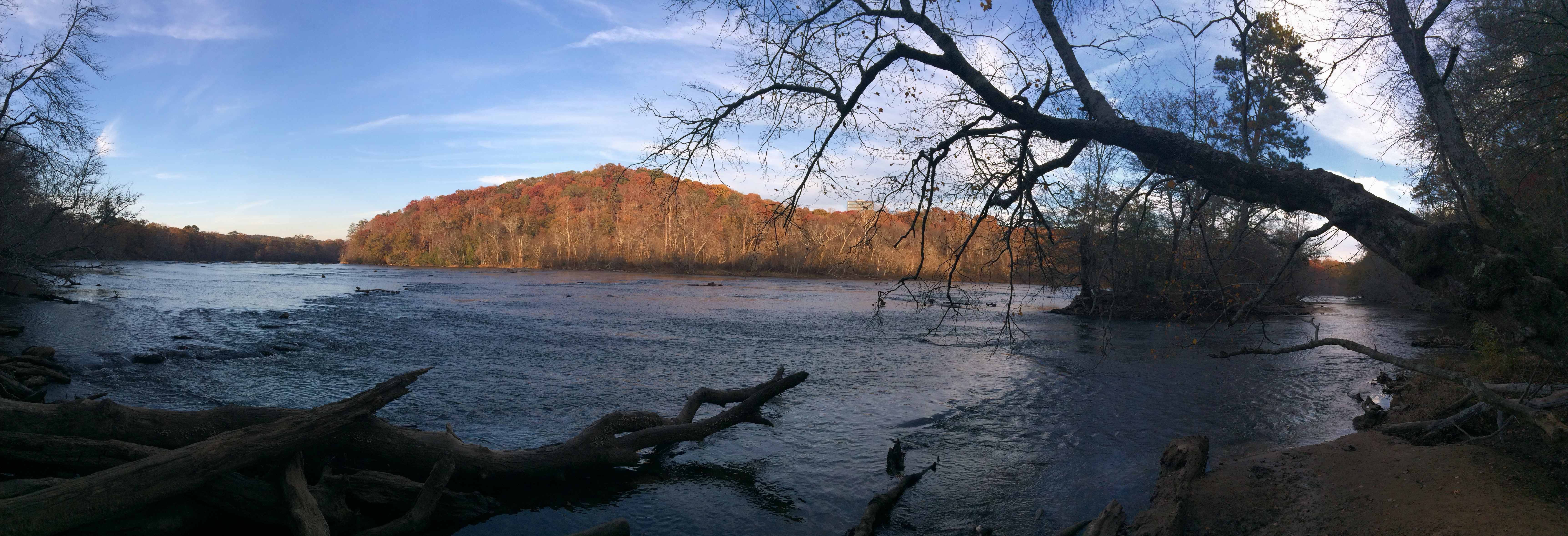
Chattahoochee River, Cochran Shoals, November 25, 2016
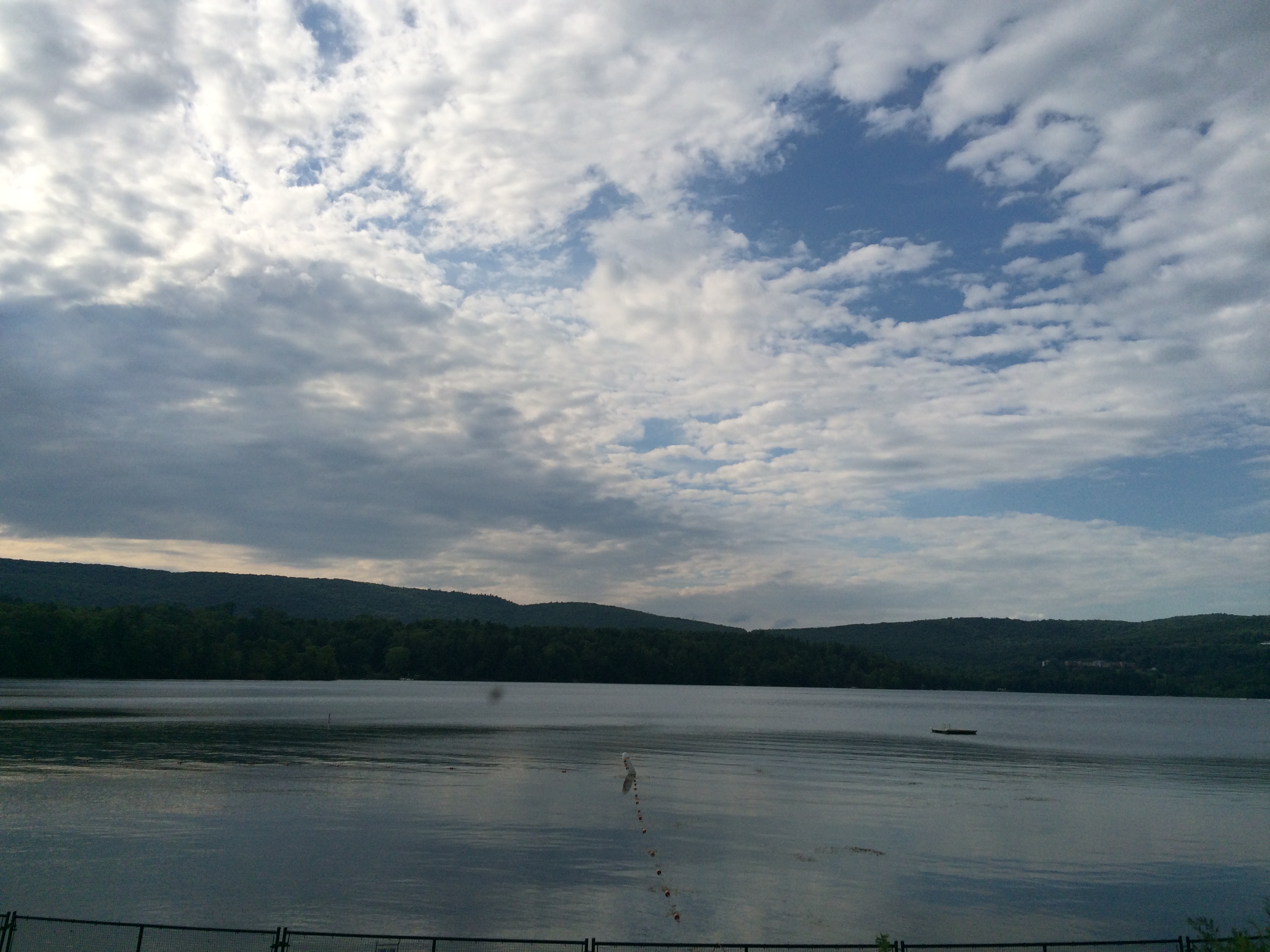
The Stockbridge Bowl, one of my favorite places to swim.
To get myself back into writing, I decided to compile different thoughts about the ocean by female swimmers, most of them open-water swimmers, and put them into a single poem, a kind of collage.
Open Water Swimmer’s Collage
To be in the azure blue as if
You’re breathing. The body, immersed,
Amplified, heavier and
Lighter at the same time.
Looking down miles and miles and miles,
The sea is like a person–like a child
I’ve known a long time.
I never feel alone when I’m out there.
You will forget who you are,
What you did in your life,
And which country you are from.
There’s a knowledge that you
Really are on edge here,
And that you can push yourself too far,
All the way across that vast,
Dangerous wilderness of an ocean.
When I swim in the sea I talk to it.
No matter how rough, cold, or deep,
The water is your friend.
We go in the pitch black of the night.
When we’re in the water,
We’re not in this world. You are a swimmer,
And whoever is next to you
Is a swimmer, too, all of us in the water.
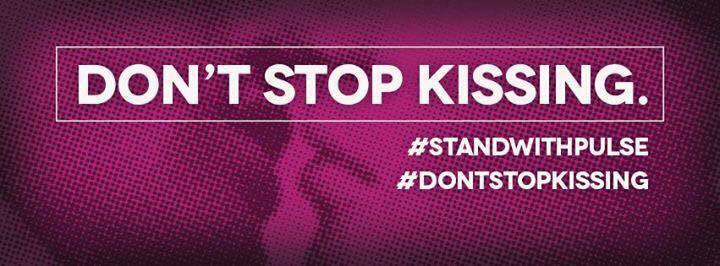
The quotes in the poem I wrote come from an article on NPR that shares some memories about each of the victims who lost their lives on June 12. To read their stories is devastating. These young people could have been our sons, daughters, brothers, sister, nieces, nephews, friends.
The older brother of victim Amanda Alvear says about his sister, “She’d rather they spread more love, keep friends and family close, and have a good time doing it.”
As Anderson Cooper said in his CNN broadcast, his voice breaking with emotion, “They are more than a list of names. They were people who loved and were loved. ”
For the Victims Who Died on Latino Night At Pulse, 12 June 2016
I want to remember you
In some eternal before
Before a mother on the dance floor
Sees the gunman
Commands her son to get down on the floor, Isaiah
Covers him with her body
Before a mother in Sunday darkness cries
They’re killing our babies
I want to remember your fingertips
Brushing the pulse of night
I want to remember you swaying
Under laser lights
Face and arms glowing indigo, pink
I want to remember you salsa
Remember you cumbia
Remember you merengue
Remember you danzón
I want to remember you alegre
Remember you samba
Remember you bachata
Remember you reguetón.
I want to remember you selling perfume
Remember you drag queen
Remember you drag king
Remember you student
Remember you father
I want to remember you arm in arm with your sweetheart
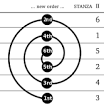 Sestina spiral.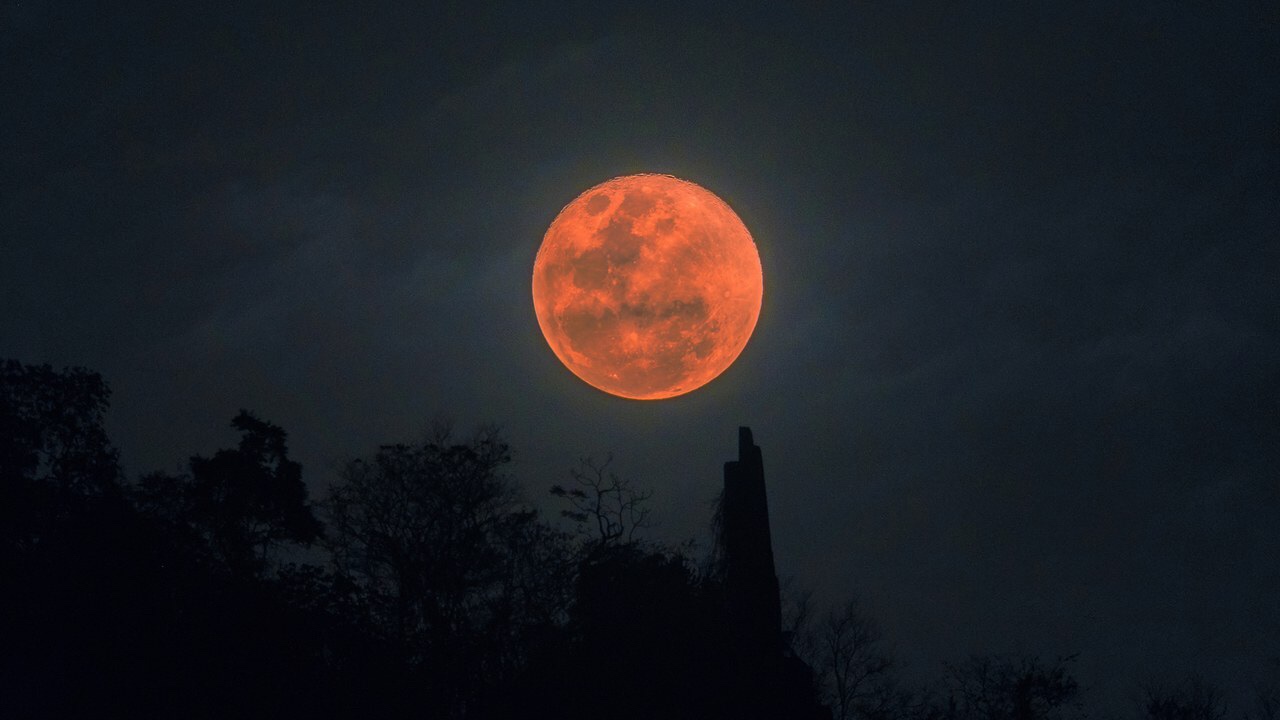
 Balanced On the Edge