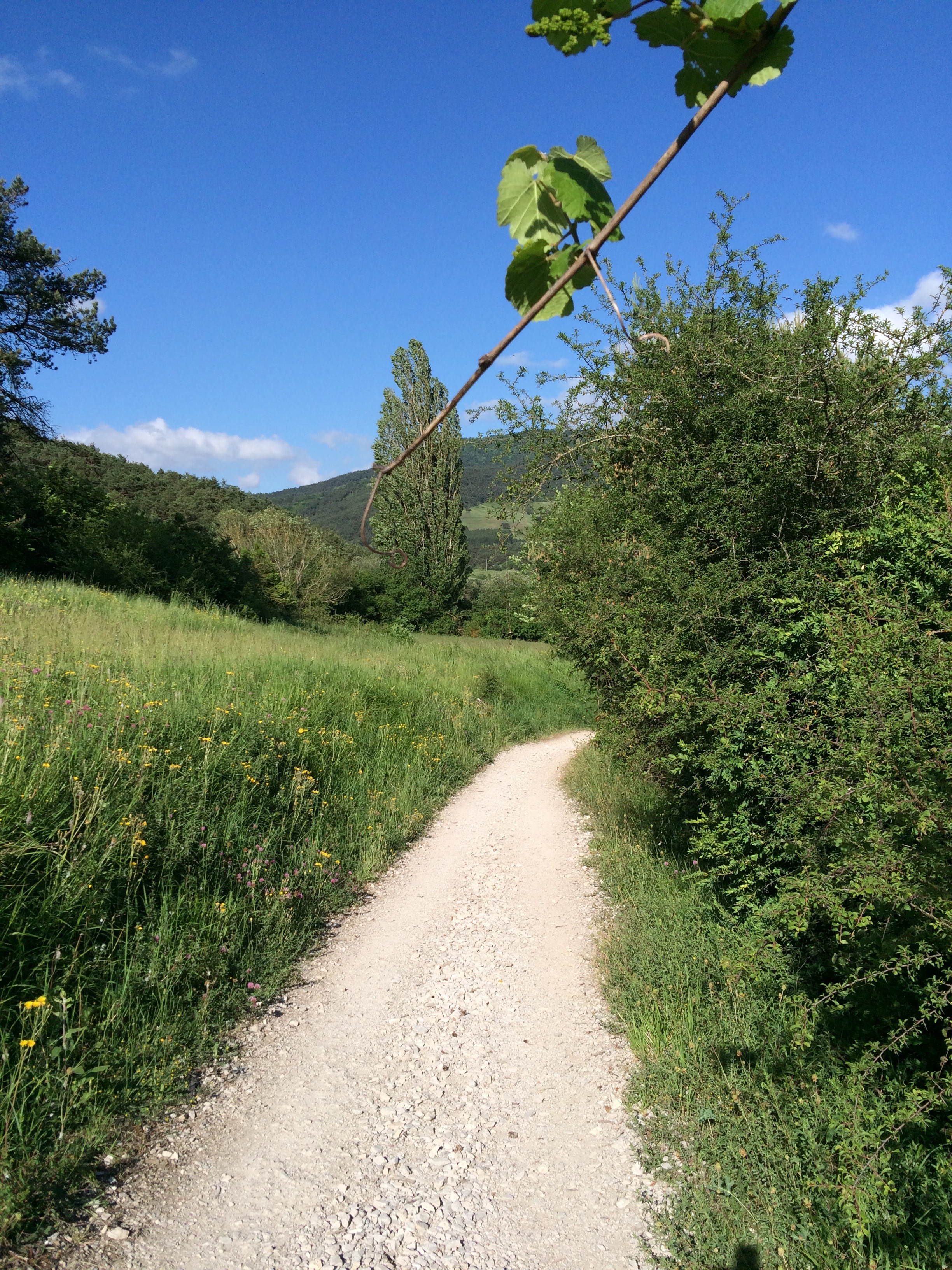
While waiting for my flight, I’m doing some gentle yoga and trying to learn what has happened with the former FBI director when a man with a long white beard in an orange turban gives me a mantra that he sings–“baba nam kevalam, todo es amor: everything is an expression of one infinite, loving consciousness.”
Category: journal entries
-
Account of a Comet: Redacted Poem
-
Awaken Me From This Mortal Dream
In this dream, the driver’s asleep at the wheel.
The dream won’t let the driver’s foot touch the brakes.
It’s night, and the headlights won’t turn on.
In this dream, highways loop in labyrinths,
deer clog the exit ramps. Wild fires
savage forests of magnolia, loblolly pines, mountain laurel.
Forecasters on the radio warn to stay inside,
shut the windows, don’t breathe the code orange air.
In this dream, police hose a circle of water protectors
in the subzero dark, spray rubber bullets
and tear gas at Black protesters on freeways.
In this dream a Syrian boy caked with bomb-blast
wipes blood from his eye with a tiny fist.
In this dream, men in three-piece suits with fashy haircuts
ink swastikas on concrete benches,
grab the vaginas of women with dragonfly tattoos,
snatch the hijab off a mother’s head.
In this dream a fevered white man in a church
shoots down nine Black worshippers.
In this dream a president sings Amazing Grace
with his whole heart in his throat.
In this dream a block-letter sign
outside a church with the tallest, whitest spire
shouts, “PRAY FOR DONALD TR**P.”
In this dream a shard of grief is lodged behind my breastbone.
-
Open Water Swimmer’s Collage

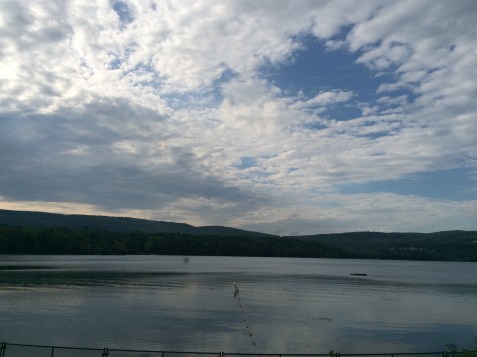
The Stockbridge Bowl, one of my favorite places to swim. To get myself back into writing, I decided to compile different thoughts about the ocean by female swimmers, most of them open-water swimmers, and put them into a single poem, a kind of collage.
Open Water Swimmer’s Collage
To be in the azure blue as if
You’re breathing. The body, immersed,
Amplified, heavier and
Lighter at the same time.
Looking down miles and miles and miles,
The sea is like a person–like a child
I’ve known a long time.
I never feel alone when I’m out there.
You will forget who you are,
What you did in your life,
And which country you are from.
There’s a knowledge that you
Really are on edge here,
And that you can push yourself too far,
All the way across that vast,
Dangerous wilderness of an ocean.
When I swim in the sea I talk to it.
No matter how rough, cold, or deep,
The water is your friend.
We go in the pitch black of the night.
When we’re in the water,
We’re not in this world. You are a swimmer,
And whoever is next to you
Is a swimmer, too, all of us in the water.During the Olympics, I paid close attention to the swimming events, especially to women swimmers. Yusra Mardini’s story and words inspired me. She’s an eighteen year-old Syrian woman who swam in the Rio Olympics for Team Refugee.
She and her sister , when Mardini was still seventeen, swam in the open sea from Turkey to the Greek island of Lesbos for three hours in 2015, pulling a dinghy, and saved themselves and twenty other people.
The other swimmers whose words I have included are:
Diana Nyad, first person to swim nonstop from Cuba to Florida without a shark cage;
Gertrude Ederle, first woman to swim across the English Channel;
Lynne Cox, open water swimmer, and author of Swimming to Antarctica;
and Leanne Shapton, swimmer, writer, and author of the new memoir, Swimming Studies.
This kind of writing is called found poetry. As the Poetry Foundation explains, “Found poems take existing texts and refashion them, reorder them, and present them as poems.”
-
How I’m Processing These Times
Many of my friends on social media have said they were nauseous after the #RNCinCL ended. In spite of having a two-day headache, I have been reading articles about the orange real estate tycoon, watching Bill Maher (whose opinions I don’t always agree with, especially his puerile views about religion), Steven Colbert, Jon Stewart, and other satirical videos, including this gem by Randy Rainbow, Ya got Trump Trouble!
In an effort to stop my incessant preoccupation with the rhetoric of hatred, I’m taking this online MOOC, Whitman’s Civil War: Writing and Imaging Loss, Death, and Disaster . The course is taught by University of Iowa professors Ed Folsom and Christopher Merrill. We are reading Whitman’s war poems and some of his prose writing and responding with both discussion comments and original work.
I want to write about my father’s death, the loss that is so immediate to me, but I need to connect his dying to these times we are living in: mass shootings in night clubs, elementary schools, and movie theaters, terrorist attacks overseas, the brutality of police toward Black citizens, the deaths of Anton Sterling, Philando Castile, Tamir Rice, Eric Gardner… (the list is too long), the ugly rhetoric of ignorant white supremacists, an arena full of people chanting for the imprisonment of the former Secretary of State.
Whitman wrote for everyone, for all of America. He recognized himself in the fallen soldier, the nurse, the mother saying goodbye to her son.
As a white woman in living the 21st century, how can I recognize myself in the bile coming from the mouths of Trump and his followers? Will I recognize myself in the bodies of Black men left to bleed on the street? To be truly honest with ourselves and to show true compassion, we have to know that we are all interconnected. There is no Us versus Them.
While it comes naturally to me to empathize with the plight of many Black people, I won’t be honest until I look deeply into the hatred coming from a fairly sizable chunk of the white population. Is there any way to transcend this hatred? Poetry and art might be the bridge.
-
Yoga on the Porch
This past April, my father passed away after a six-month illness. It’s too soon for me to write about the experience we went through as a family, but I can talk about my own health.
I had been experiencing early morning anxiety since November, around the time my dad got sick, and then I started waking in the night with panic.By the end of April my nerves were completely shot and my “fight or flight” response was firing 24/7.
I ended up finding a wonderful doctor whose integrative approach is helping me recover, and in the meantime, I’m spending my mornings practicing gentle yoga on my back porch.
My backyard is completely wild and overgrown, a place that could definitely be tagged as a wildlife refuge in the middle of the suburbs. All I hear in the early morning is the wind in the trees and birdsong.
May we all experience healing and wholeness, the feeling of wellbeing, of feeling safe and secure and at peace.
-
Review: Alice Teeter’s Elephant Girls
At a recent gathering of the newly formed Atlanta Women’s Poetry Collective, I had the pleasure of meeting Alice Teeter, an Atlanta poet I had known of for quite some time.
Teeter hosts a monthly poetry reading series, a salon that has a reputation for attracting some of the best poets who pass through or live in our city.
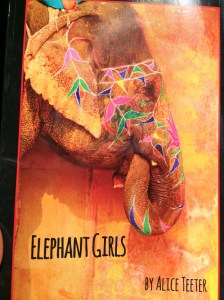
Elephant Girls (Aldrich Press, 2015), is Alice Teeter’s third collection of poetry. Didivded into three sections, Elephant Girls explores the myriad facets of the life of the mind and the body, with subjects such as love, desire, imagination, dreams, identity, history, and nature.
The speaker in the poems is fluid, changing from one poem to the next. In “The Sage,” the speaker explores meeting a woman at a conference and the feelings of lust this woman inspires. The speaker states, “her hot hand grasps your thigh,” but later in the poem the woman disappears and the speaker is left with “the person you were born to desire most of all/ the one you have been looking for/spread your hand she is always with you.”
In other poems, such as “The cat didn’t know which she liked best,” the speaker is an animal. In this poem, the cat contemplates which creature pleases her most, the bear or the man.
In this poem and many others, Teeter enters the world of imagination, where possums and skunks enter her car through an open window, a dog paces, alone and afraid, on the Day of the Dead, and big fish “swim like shadows” in dark water.
Teeter delves into the world of carnal pleasure, taking sensual delight in glazed donuts that she compares to “sendal thighs,” thus rendering an indulgence of food into an indulgence of the sensual pleasures of the body.
The stuff of everyday life appears in this collection; even toilet paper makes an appearance. In “Two-Ply,” three rhyming quartets
remember the speaker’s father and his “three-sheet rule.”
The poems in Elephant Girls range from playful to surreal and mythic. The wellspring of this book, full of free verse, sonnets, and other forms, is love-love of family, of the beloved, of lakes, vegetation, of all facets of life that emphasize the joy of being alive.

-
After Yoga Writing Circle: Sankalpa
The writing that my fellow yogis produce after our Saturday yoga class with Sally continues to inspire me.
For our last session, we wrote about our sankalpa, a Sanskrit word that means “resolve, intention.” Before meditation, the practitioner visualizes herself having, doing, or being the sankalpa.
Typically, this type of meditation is done before a yoga nidra practice, which involves lying down and mentally naming 54 body parts.
With the body and mind in a state of deep relaxation, yet still awake and conscious, the practioner’s intentions penetrate the deeper layers of consciousness, creating a greater potential for the goals to be realized.
I wrote this intention about how I would like to wake in the morning. I wrote it in the present tense, as if this were my actual waking experience.
I wake in the morning with the first light of day and take a deep breath. My heartspace feels open and soft, and I’m at peace.
Birds singing outside my window fill me with joy.
I sit up in bed and meditate for a short time before I let the dogs out into the backyard.
After a cup of chamomile, I roll out my yoga mat, full of energy and motivation to meet the day.
I’m excited about life and the possibilities this new day will bring.
I suppose this is a kind of prayer I am asking of the cosmos, of God, and of my own inner self. It might sound like a sugarcoated version of reality, but as Tibetan Buddhist scholar Robert Thurman has said, “To create something, you have to imagine it first.”
Why shouldn’t we desire the best for ourselves in terms of spiritual and psychic evolution?
-
Camino On My Mind
A few weeks ago I watched an interview between Oprah Winfrey and Shirley MacLaine on Super Soul Sunday. Speaking about her pilgrimage to Santiago de Compostela, MacLaine said something to the effect that, “The pilgrimage doesn’t truly begin until you’ve come home.”
My pilgrimage to Santiago de Compostela began in May, 2015. I left San Jean Pied-de-Port, France on May 26 and arrived in Santiago June 28. During those 34 days of walking I meditated, wrote poems, met friends, cried, laughed, sang, ate good food, hobbled with shin splints, slept amid snoring pilgrims, and threw away the remaining antidepressants I carried across Spain.
Eight months have passed since I came home to Georgia, and I have been off antidepressants this entire time. It has been hard.
Since November, I wake in the morning with the fiery pain of nerves in my solar plexus. It takes an hour of mindful breathing to slowly make my way out of bed at 8:00 am. Once I’m up, the rhythms of the day take over. The sun warms my muscles, the others in my family wake up, and the pain under my sternum dissipates.
Buddhist teachers would tell me that my suffering comes from expecting only good feelings. The trick is to watch the feelings come and go without identifying with them. But the pain! It’s sometimes impossible not to lose myself in the misery.
Some might wonder why I don’t go back to my psychopharmacologist for a new prescription. If I were suicidal, I would seek treatment, but I am not. I go to a counselor who helps me with moving the energy in my body. She also gives me suggestions for healing old wounds. I know that everyone is different, and I don’t recommend that anyone ditch their meds because of my experiences. I took antidepressants for twenty years.
I live with the hope that by entering the suffering I will eventually pass through it. I also practice what Thich Nhat Hanh calls “watering the seeds of joy.”
One to two hours of vigorous exercise works to exorcise my inner demons. I take long walks. I swim one to two miles at a stretch. I practice yoga. I’m grateful for the circumstances in my life that allow me the time I need to take care of myself.
Now that spring is around the corner here in Georgia, my thoughts are on the Camino again. I long for six hours of walking a day, no cell phones, computers, chores, or familial drama. It’s the kind of retreat I crave.