Balanced On the Edge

    • About Balanced on the Edge
    • Publications
    • Swimming This

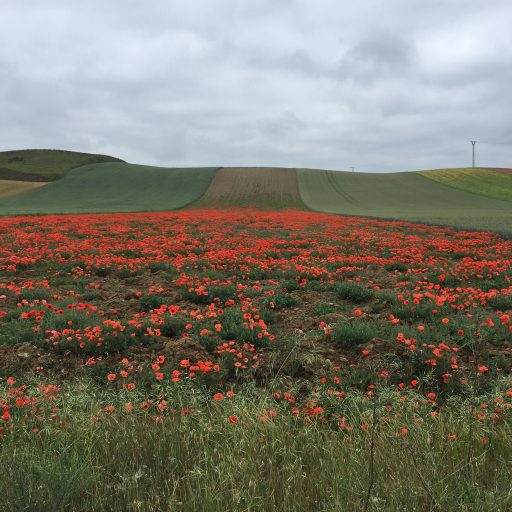
A field of red flowers and a cloudy sky
Camino de Santiago
  • Today’s Walk

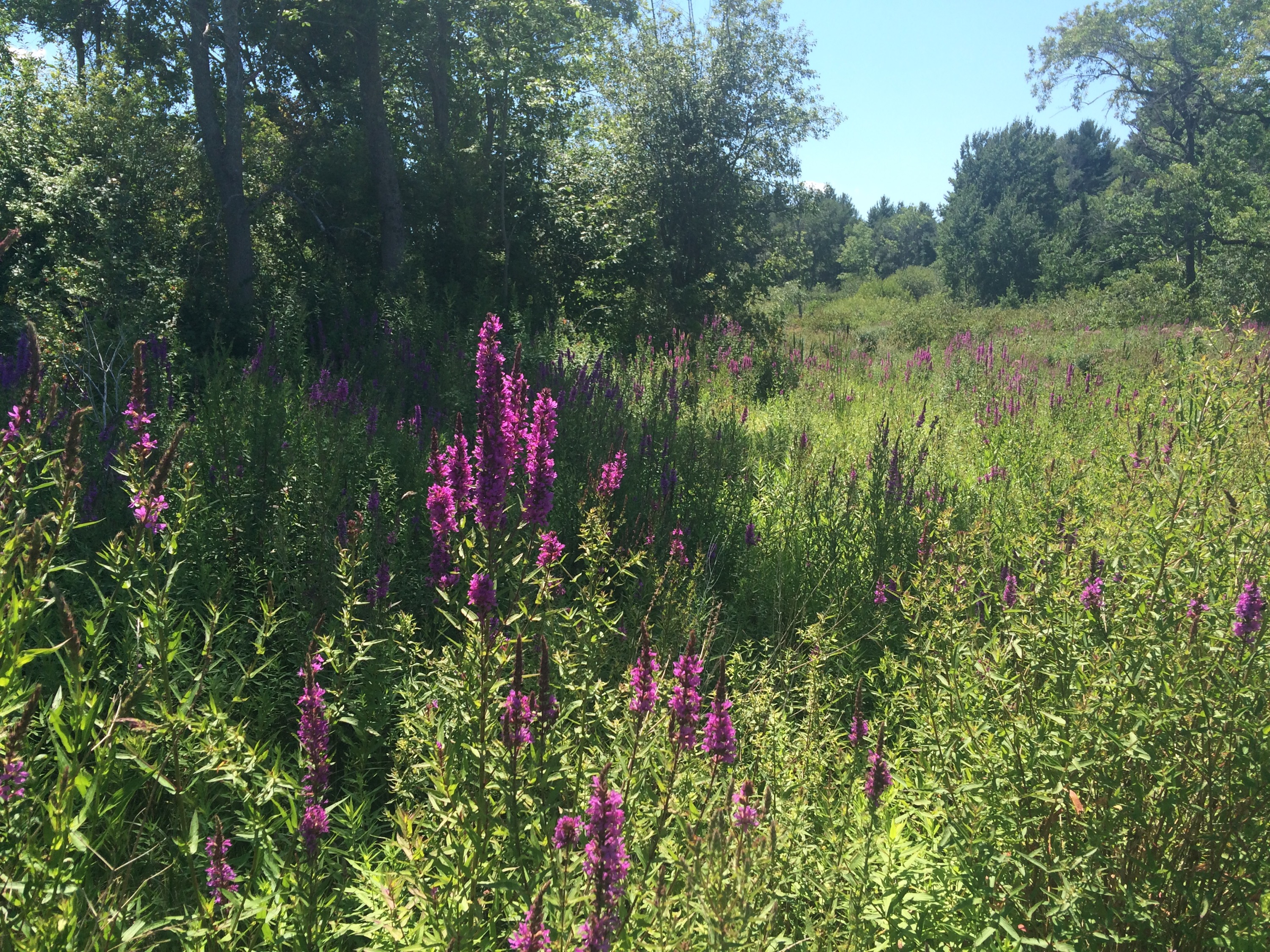
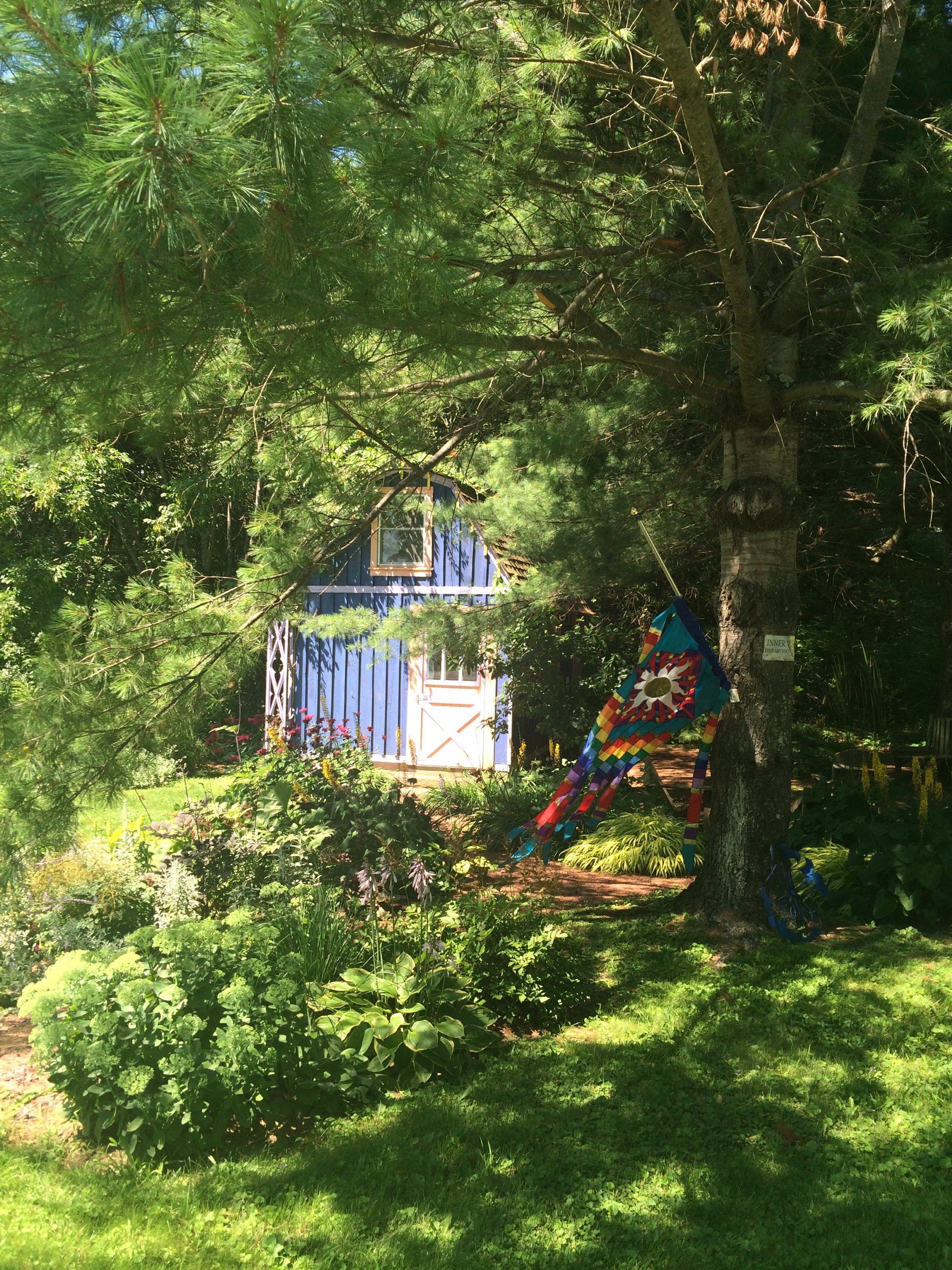
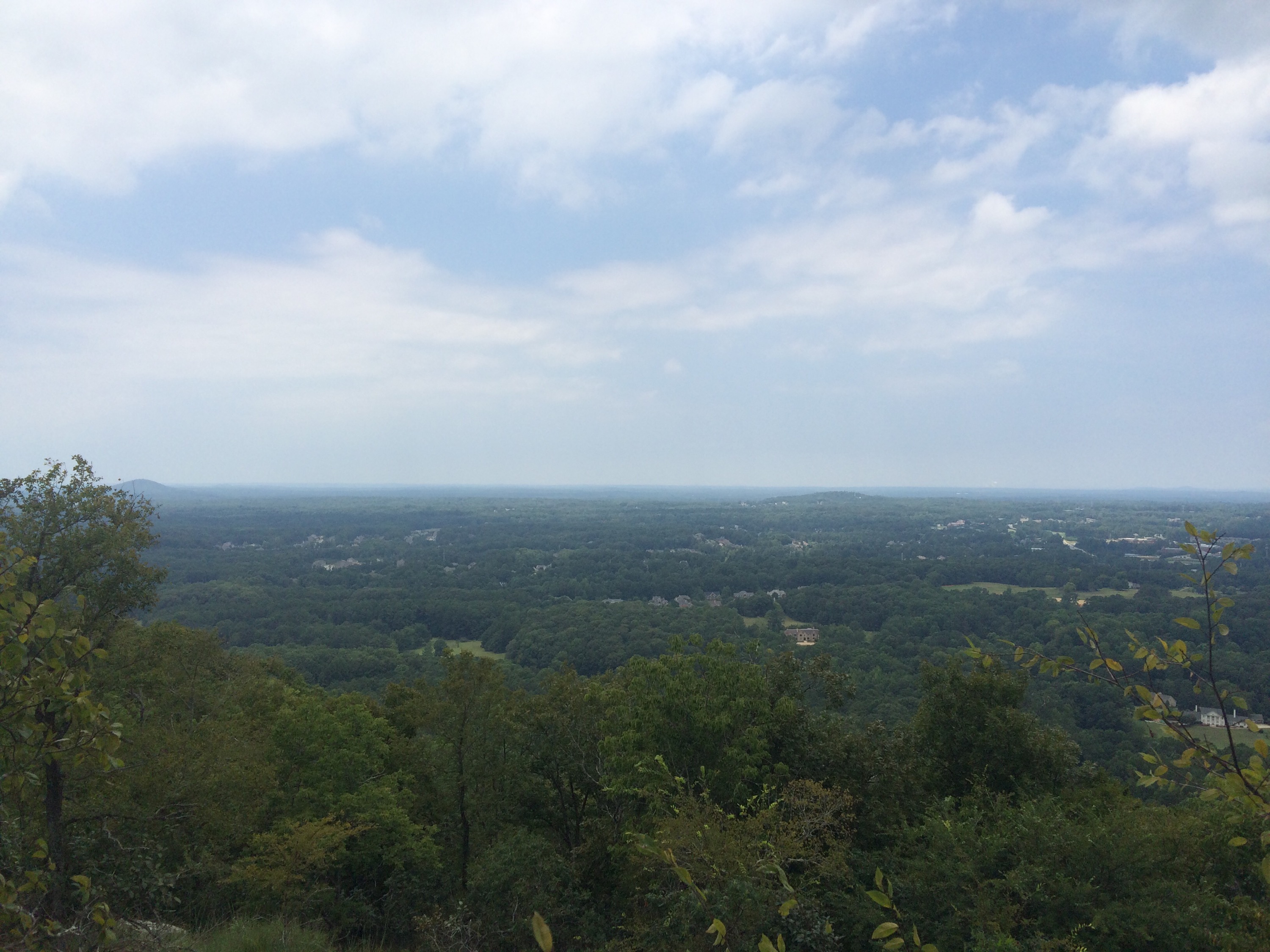
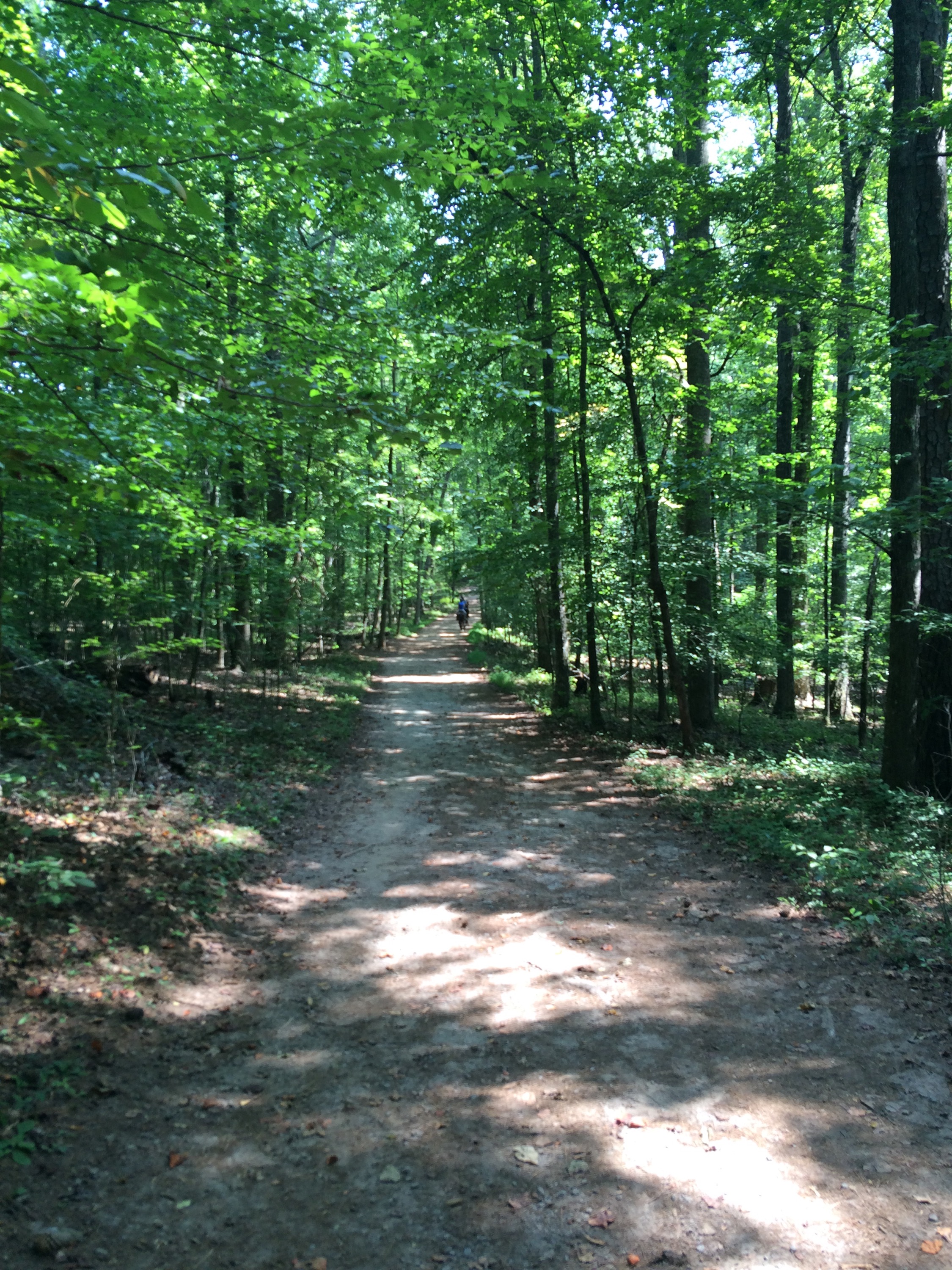
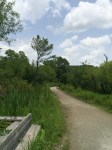
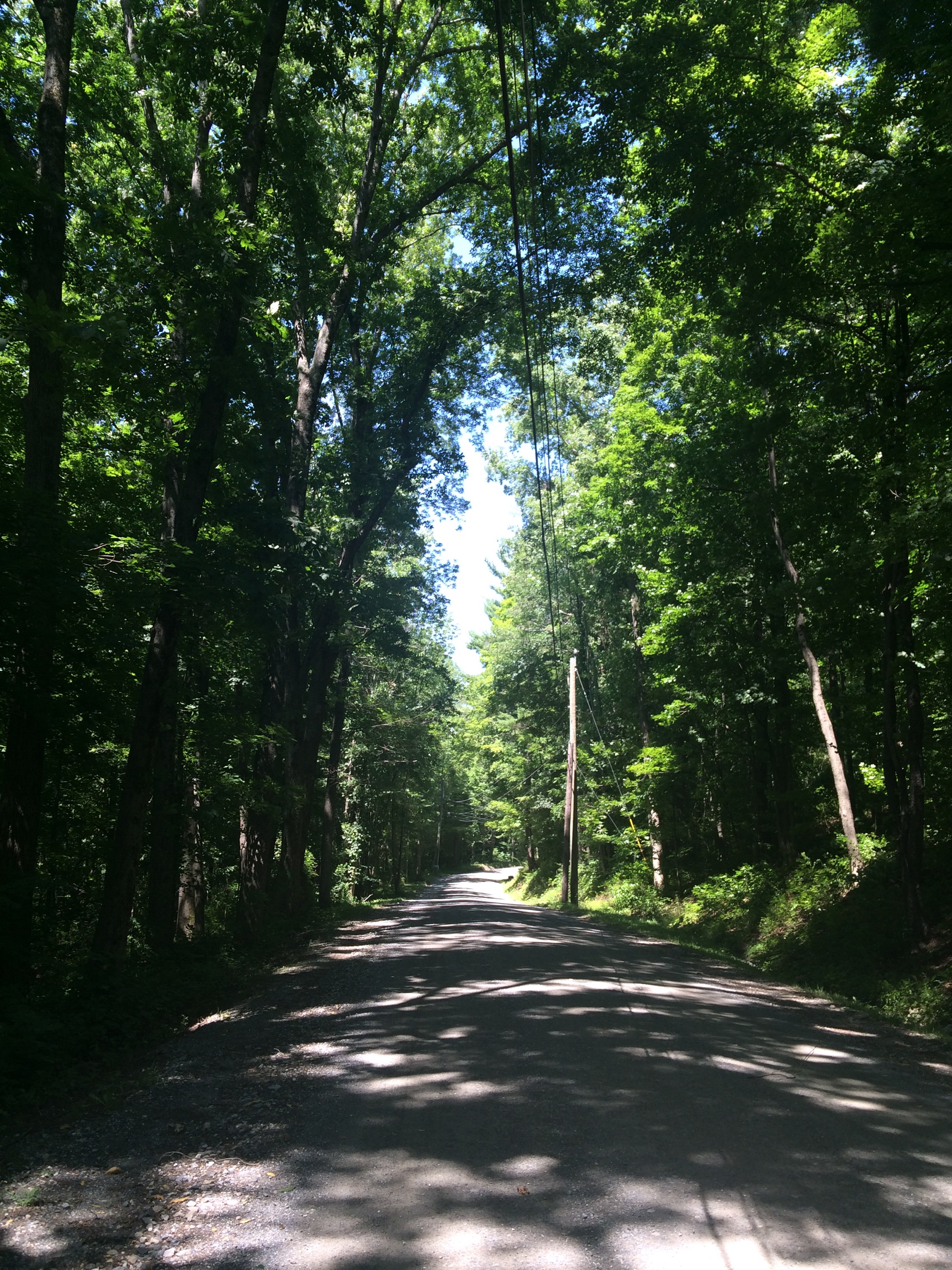
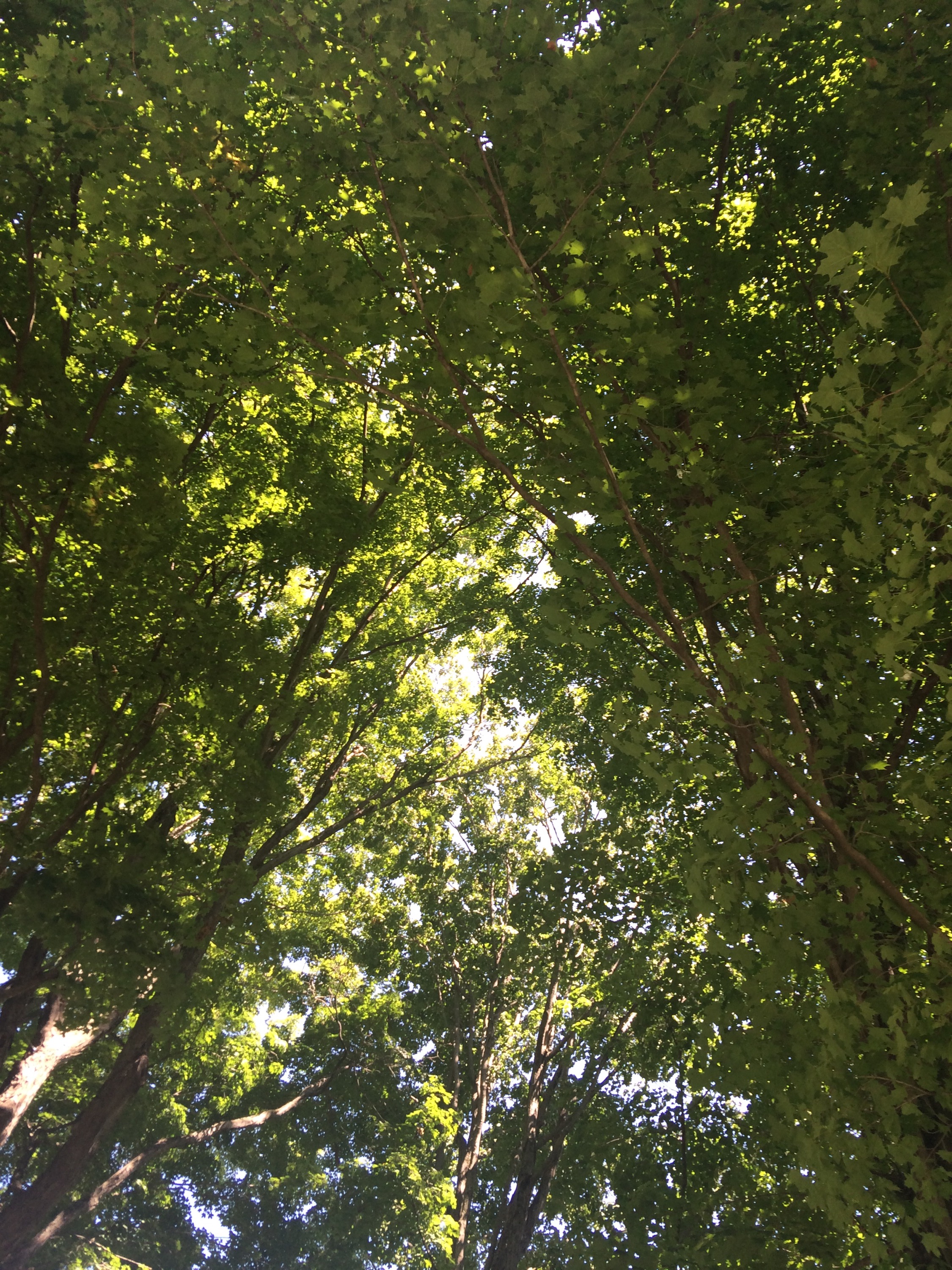
    I’m in the Berkshire Mountains now, soaking up the fresh air. SA and I have taken his mother to her place here because she needs the help, and since I’m in this beautiful part of the world, I’m taking advantage of the country roads for some longish walks.

    From West Stockbridge on Iron Ore Road I went up Cone Hill Road, turned right  on 41, and entered Richmond, about 6 miles.

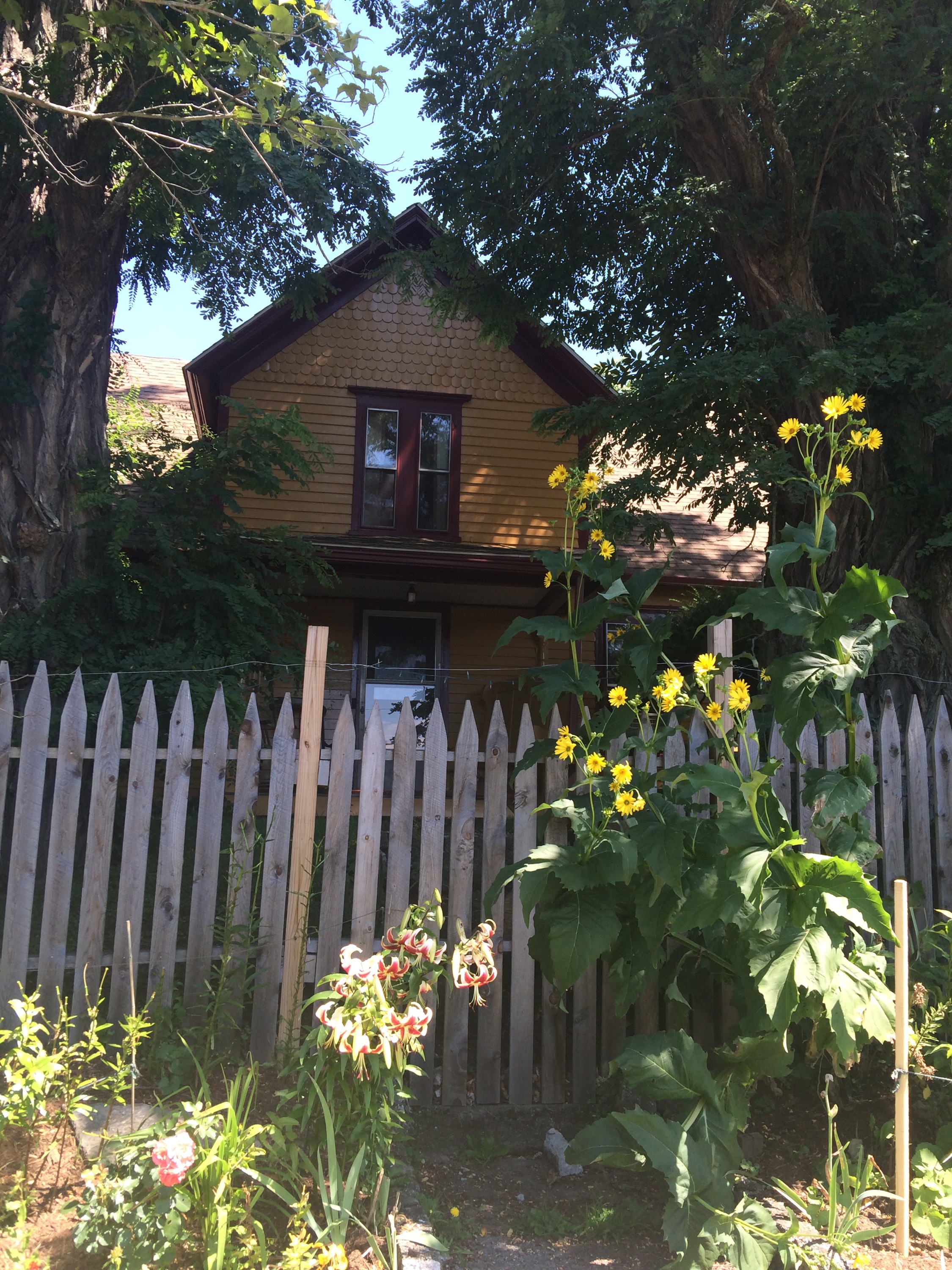
    Before leaving Iron Ore I walked around the neighborhood to see if anything had changed since I was here a year ago, but the same tidy houses with the same tidy lawns greeted me as I passed.

    People here have lovely gardens of perennials–tiger lilies, Black-eyed Susans, sylvia, Queen Anne’s lace.

    On highway 41 I picked up a menu at a barbecue place called Lakota, across the street from the Richmond fire station.

    Crossing over the train tracks reminded me of a book I just finished called Bold Spirit, the story of Helga Estby and her daughter Clara and their walk in 1897 across the U.S.  from Spokane, WA to New York City. They walked most of the way along railroad tracks so they wouldn’t get lost.

    They faced tremendous criticism for even going on such a walk because women were supposed to stay at home to raise their children. This was before women had the vote, and many men thought women were too weak to endure such an arduous trip.

    Helga accepted the challenge to walk because the person who completed the journey would receive 10,000 dollars, money she would use to save the family homestead from bankruptcy.

    I didn’t face one tenth of Helga’s hardships when I made my pilgrimage to Santiago, but traveling alone in Spain was not exactly easy. Women have to be on their guard while walking alone, even if we are no longer young.

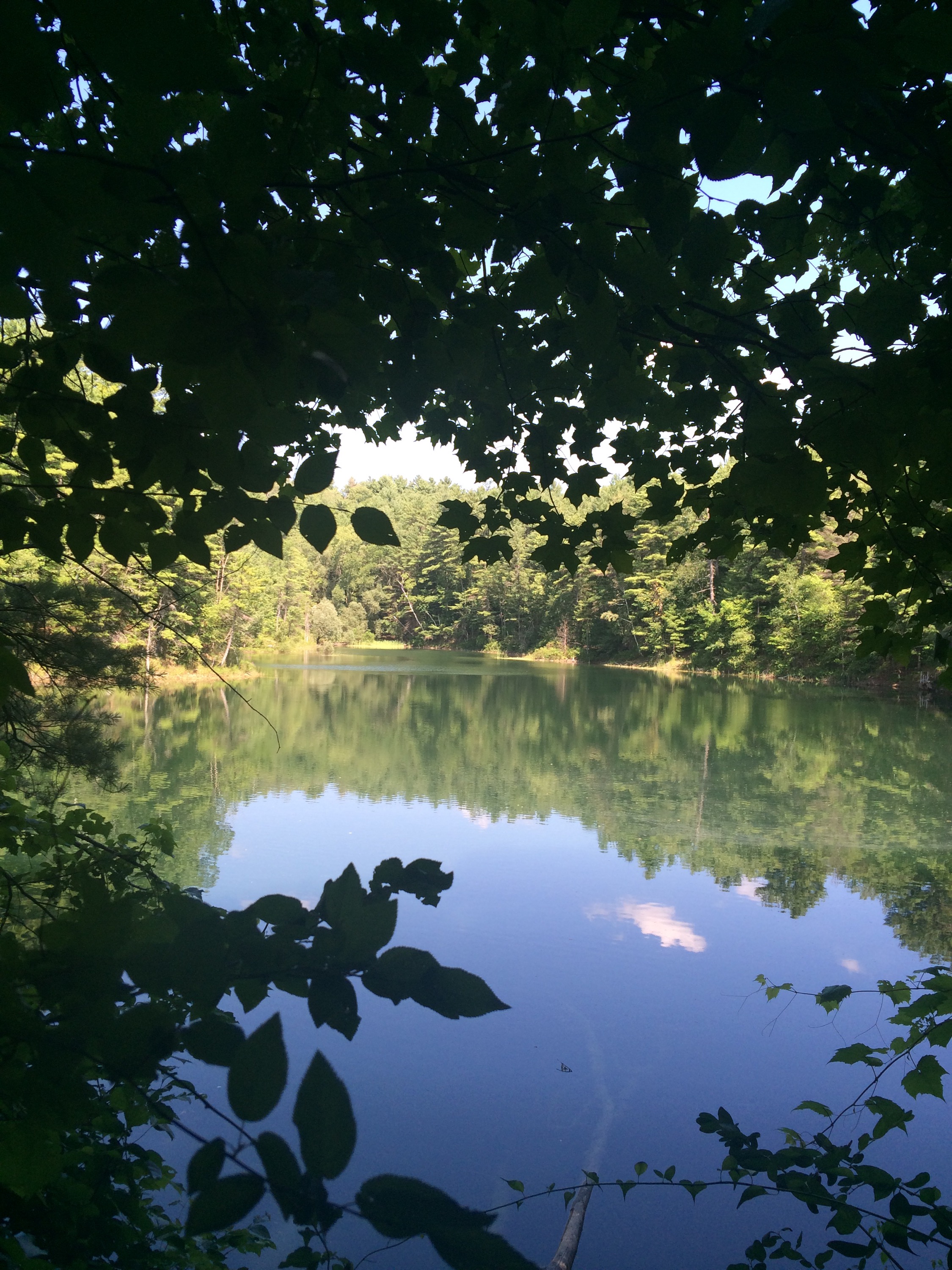
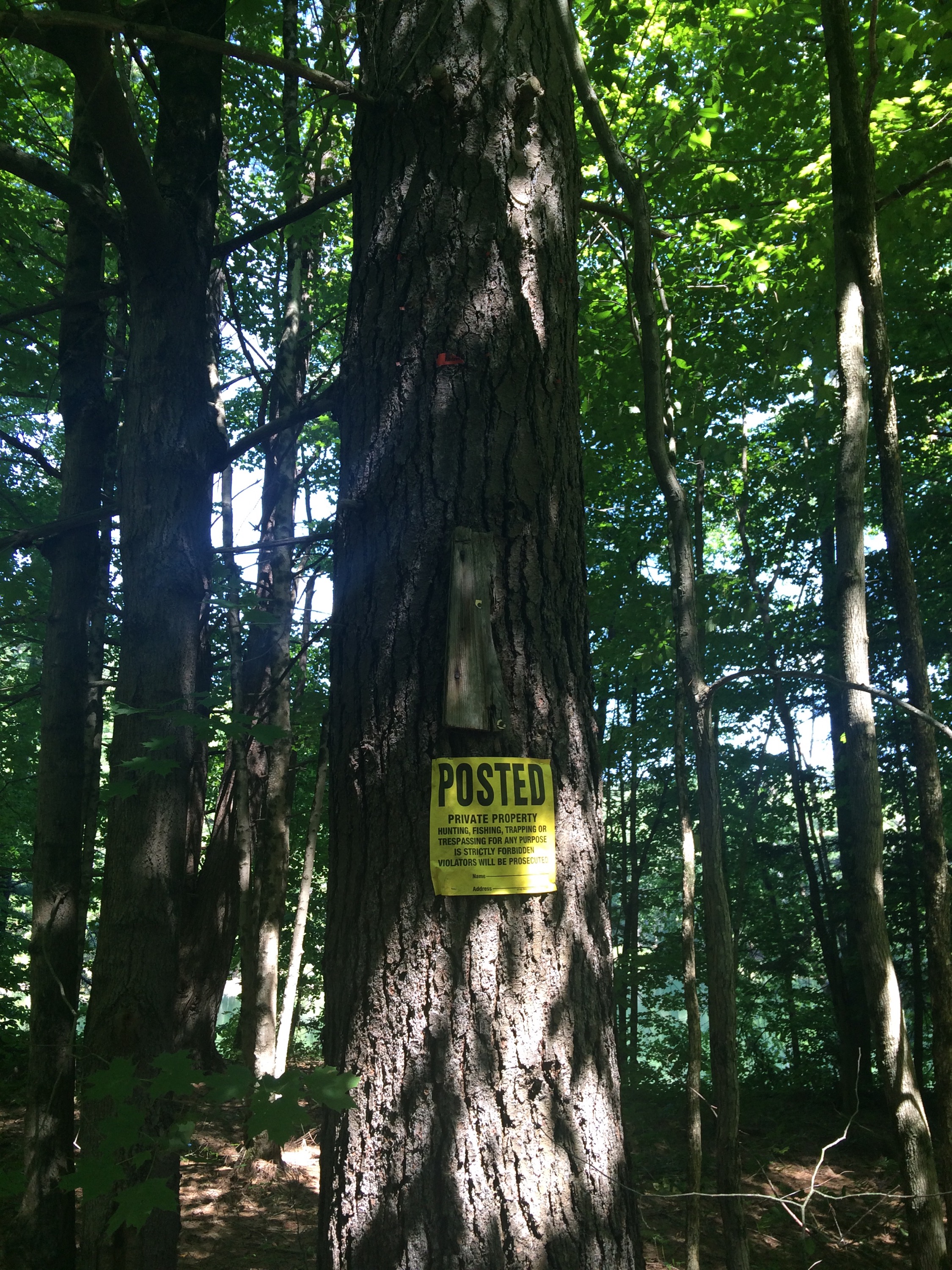
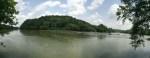
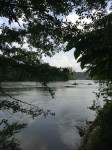
    On my way back to Katherine’s house I went along Furnace Road where former Governor Duval Patrick has built a home. He built on plot of land next to Mud Pond, an old quarry where we used to swim. Patrick bought up all the land around the quarry, so now there’s no access to it. Our sons would swing from a rope swing there along with many other locals. We would also swim out to a fallen tree floating in the center. It’s sad that now no one can swim in the cold, clean water just because one person wants privacy.


    August 3, 2015
    Berkshires, Bold Spirit, Helga Estby, Travel, Walking

  • Keeping the Camino Alive

    On a physical level, the best outcome of my pilgrimage is that after 22 years I have been able to go off anti-depressants. 

    I don’t mean to judge anyone who takes SSRIs, not at all. We are all trying to figure out what our lives mean and how best to live.  

    It wasn’t the Camino alone that helped me ween myself off them. I also had the help of a mind-body therapist who continues to offer suggestions for passing through anxiety and panic, the two main symptoms of the depression I have experienced off and on since childhood. 

    If the medications work, then take them. But after more than two decades on various SSRIs, I had fluctuating blood pressure and strange head rushes that led to near fainting, symptoms that have now disappeared since I went off the medication. 

    I attribute my peace of mind to the days and days of spending six to eight hours outdoors, walking and meditating. Even though the heat in Georgia can be unbearable, I continue to walk.

    Each day is a new challenge in maintaining a balance of body, mind, and spirit. I’m tottering on a fragile tightrope of sanity, but walking and writing continue to be my medicine. 


    Yesterday’s hike:

    About 8 or 9 miles, from Burnt Hickory Road to Dallas Highway at Kennesaw Battlefield Park, then on to the visitor’s center and back to Burnt Hickory.
    Creatures I noticed:

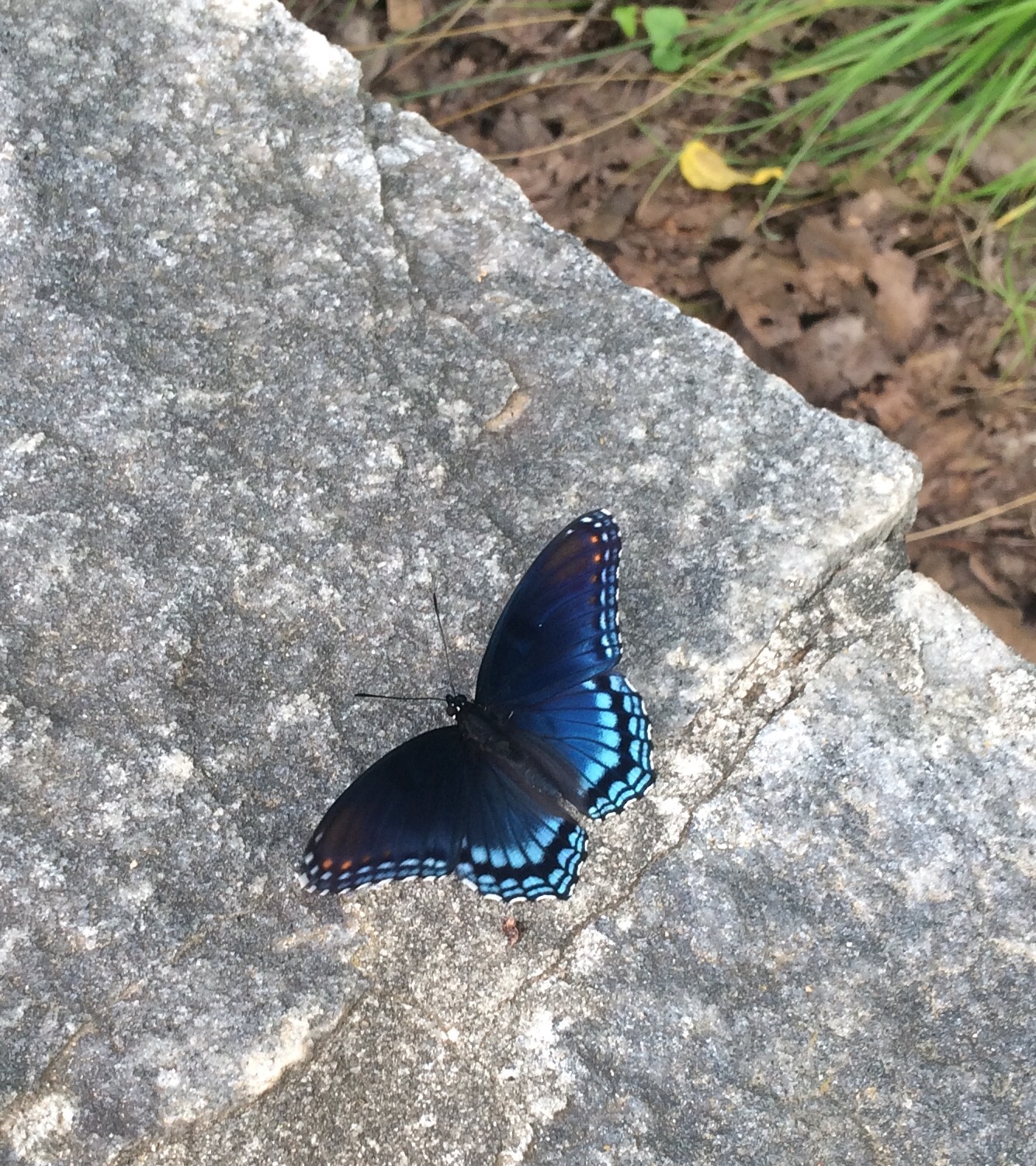
    Dragonflies, ants, butterflies, various birds, including two giant vultures, a wee toad, about the size of my thumb pad, a chipmunk, many squirrels.
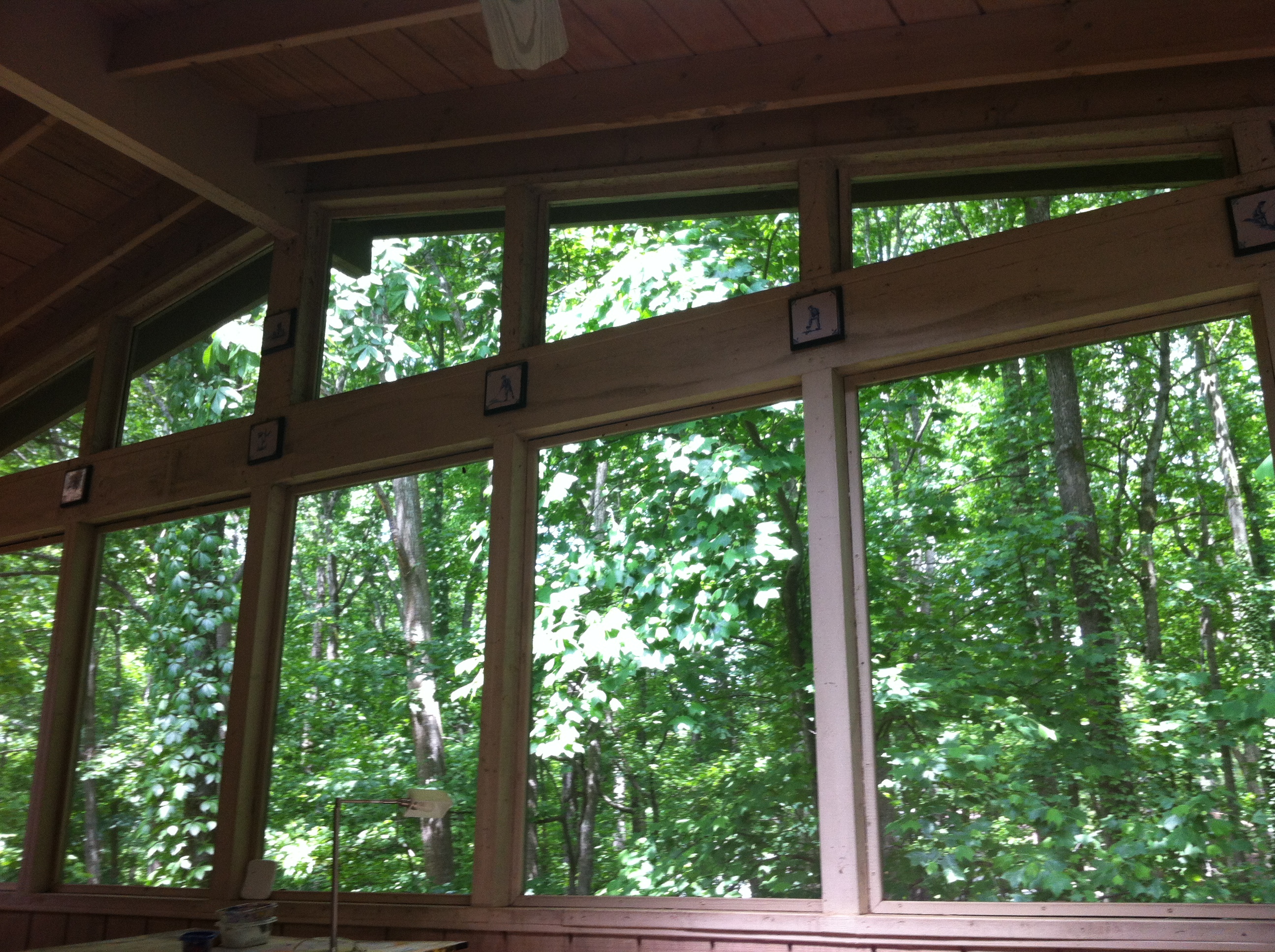
    I stood still and listened to the cicadas in the trees and the grasshoppers in the tall grass. There was very little breeze, and the trees were still and silent, their leaves dry and weary from the heat. The noise from the highway and the passing trains at times overpowered the silence of the woods.  

    It was a heavy, humid trek. I encouraged myself to keep walking by remembering the way I felt toward the end of my walks on the Camino–with sore feet and tired legs, I still managed to make it up those steep inclines. You can do this, I told myself. 

    August 1, 2015
    Camino de Santiago, depression, hiking, medication, Nature, Walking, writing

  • Paddling, Like Walking, Leaves Me With a Porous Heart

    Yesterday S. and I took our inflatable paddle boards out on the Chattahoochee River above the dam. We started at the Nature Center and paddled to Morgan Falls park, where the dam is. We paddled about three miles there and back.

    Because of the dam, there is very little current, a good place for S. to learn the basics of paddling. He fell in once, but only because he wanted to see if he could go faster by standing farther back on the board. Laura, the woman who taught me the fundamentals of SUP and SUP yoga, said to always stand on the “sweet spot,” the very center of the board where the handle is.

    The July sun cast a withering heat over the afternoon sky. Storm clouds gathered here and there. Pines and oaks greened the banks in a hazy blur. Water rippled like melting glass and shimmered on outcroppings of sandstone cliffs that jutted over the river.

    We paddled in silence, greeting fellow boaters as we passed them: a mother kayaking with her son, who wouldn’t hear of him jumping off the cliffs with the older boys; a young couple who had been floating downstream in an inner tube for five hours; a young man who was practicing headstands on his board.

    Paddling on a lake feels a lot like walking. Time slows down. Once I got  the hang of balancing on the board, I could pay attention to the horizon, the ducks swimming nearby, the blue heron  soaring toward a nest high up in a pine tree.

    Maybe it’s because I’m entering old age, or maybe it’s because of experience, maybe both, but I am learning to slow down with everything I do. By slowing down I accomplish more, paradoxically.  When I ease up my pace, my heart softens. With a malleable heart I open myself to the world. I become porous.

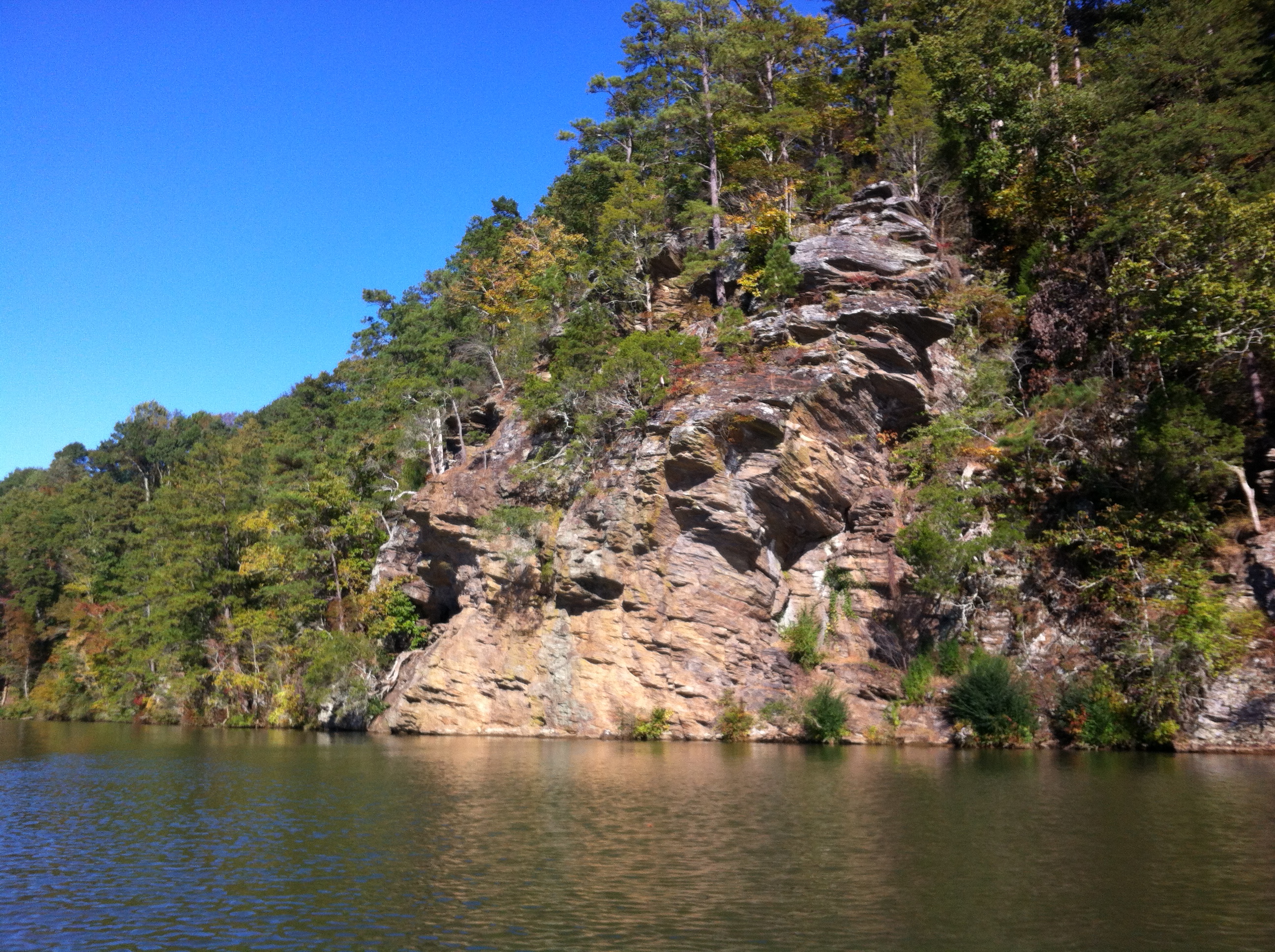
    Photo by Christine Swint. Cliffs near Morgan Falls dam, October 25, 2014.
    Photo by Christine Swint.
    Cliffs near Morgan Falls dam, October 25, 2014.
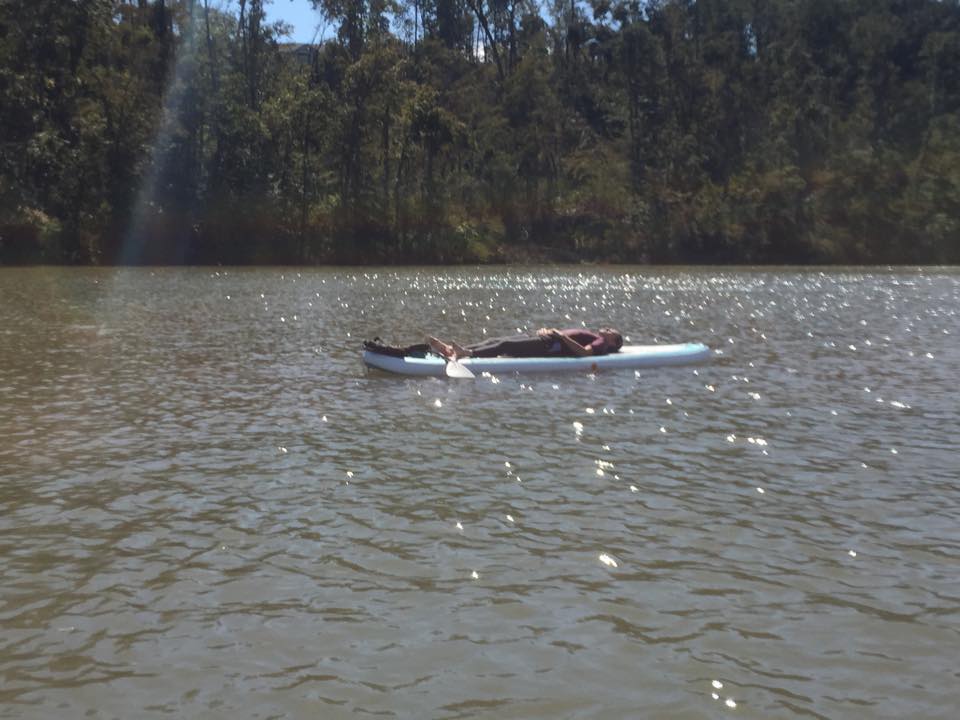
    Photo by Laura C. Mirando, SUP yoga class above the dam near Morgan Falls, October 18, 2014.
    Photo by Laura C. Mirando,
    SUP yoga class above the dam near Morgan Falls, October 18, 2014.
    July 27, 2015
    #paddling, Chattahoochee River, Morgan Falls, SUP

  • A Long Walk Might Be Like Drinking Ayahuasca

    In a comment on a recent post, “Why Go on a Pilgrimage?, “  Elissa from Sometimes She Travels  writes: In fact, one piece of Camino graffiti from last year that I thought about every day this year was, “What are you doing? Why?” 

    It has been 24 days since I returned from Spain, and I am still processing how the journey has changed me. Once we begin a pilgrimage, we never truly leave it. It’s a spiral, a labyrinth that continuously leads us closer to the center.

    In some ways, going on a very long walk seems to resemble a shamanic healing. Most of us have heard about the Australian aborigines’ ritual of the Walkabout. There are also the stories of Jesus walking in the desert for 40 days, or the Coptic Saint Mary of Egypt, who wandered in the desert a for lifetime with the hopes of purging herself of her “sinful” nature.

    A pilgrimage to heal from the emotional wounds of life has a different goal, one that resembles an extended  psychedelic trip. Maybe that’s how I see it, since I spent a long part of the journey in a self-induced poetic trance.

    Although I’ve never experienced an ayahuasca ceremony, after reading Kira Salak’s “Perú: Hell and Back,” an account of how her five ayahuasca ceremonies in Perú changed her perspective, I can say my pilgrimage has had a similar outcome.

    Speaking about coming out of a great darkness and entering the light, Salak writes:  Little suspecting that I’d emerge from it feeling as if a waterlogged wool coat had been removed from my shoulders—literally feeling the burden of depression lifted—and thinking that there must be something to this crazy shamanism after all.

    Salak states that her first ayahuasca rituals helped heal the depression she had suffered since childhood, but that she continued to experience self-doubt and fear, so she went on a second journey for further healing.

    Like Salak, I have experienced relief from depression, not after taking ayahuasca (which intrigues me but may or may not be my path), but after completing a 40-day walk to Santiago de Compostela.

    Also similar to Salak, who repeated her journey to Perú,  I am considering another pilgrimage to Santiago in the future. When I know the medicine works, it’s tempting to take more of it, and I’d much rather rely on a very long walk than the SSRIs I took for decades that I now no longer need. Maybe I never needed them.

    Chattahoochee River National Park
    July 24, 2015
    ayahuasca, Camino de Santiago, hiking, pilgrimage, shamanic healing, Sometimes She Travels, Walking

  • A Walking Fool

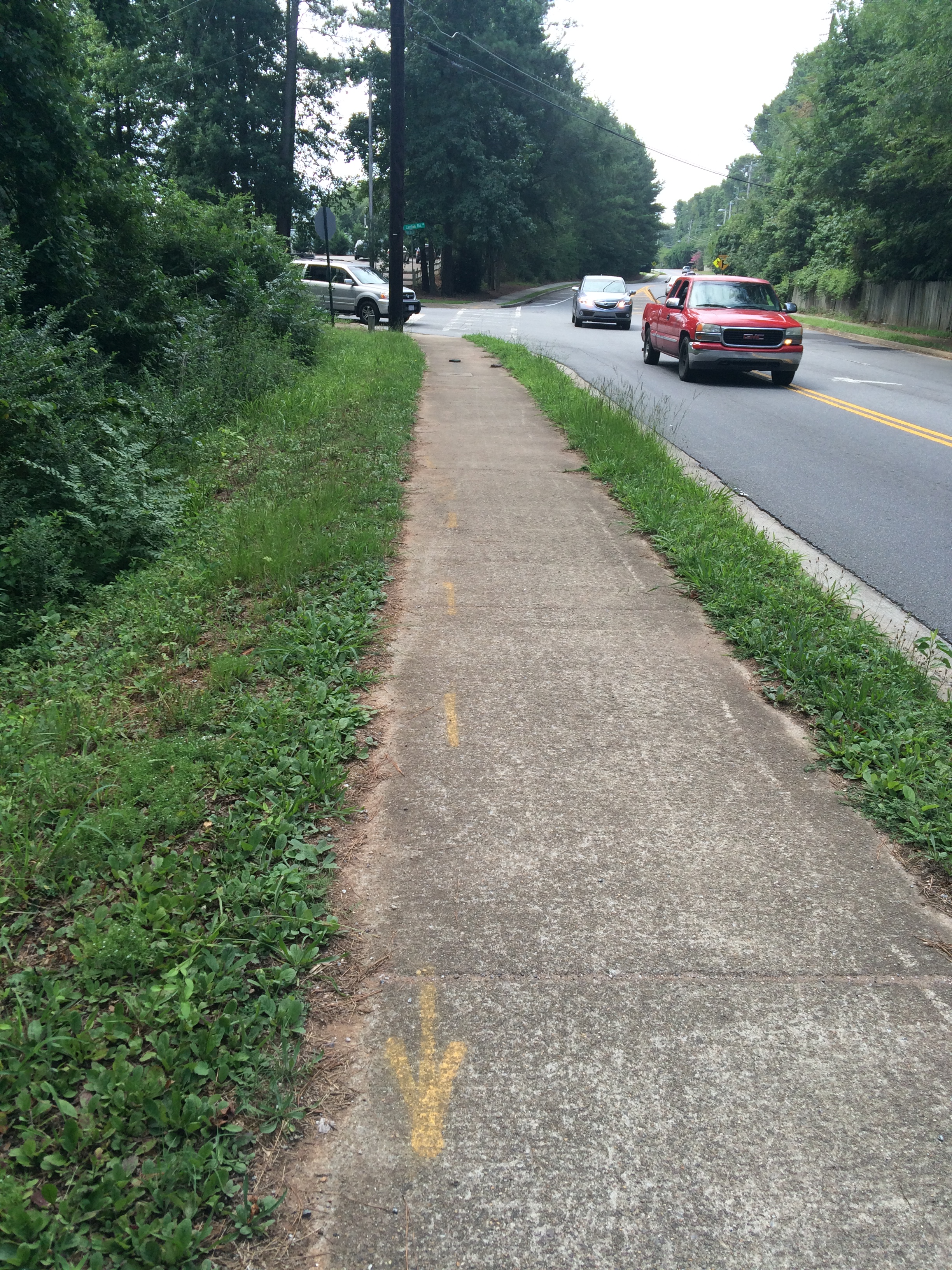
    At the bottom of this photo is a faint yellow arrow on the sidewalk where I was walking one morning in Georgia. You can take the pilgrim off the Camino, but you can’t take the Camino out of the pilgrim. I just finished the Way of St. James on June 28, but I keep walking, walking, walking.

    IMG_6059

    *For those who haven’t walked the Camino, the way is marked with yellow arrows. It’s impossible to get lost if you’re paying attention. Although I will admit to losing my way a few times due to distraction.

    I haven’t stopped walking since my return, in spite of sore feet and soles so callused my skin looks and feels like a bull’s horn. Walking helps me maintain the peace I experienced after all the days of walking in the fresh air. Walking has become my medicine.

    I walk and think about writing, relationships, memories. I walk until I don’t feel anger or grief. I walk until all I know is that my body is exerting itself in the muggy heat, sweat coating all exposed skin.

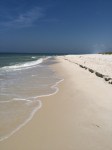
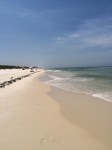
    Photos from recent walks on Cape San Blas, FL. Six miles of brutal heat. At least I had ocean winds and waves.
    July 20, 2015
    Camino de Santiago, Walking

  • Images of the Camino

    A list of what I miss, or a list of what will always be a part of me:

    Walking at dawn while people sleep in their stone houses.
    A second breakfast of cafe con leche.
    Cobblestone streets.
    Roosters screeching at midday.
    Cows in the lane, their mistress behind them with a switch.
    Red blossoms cloaking the mountainside.
    Invisible birds singing from everywhere and nowhere.
    Morning mist.
    Floating along the plains under the noonday sun.
    Lighting candles, alone in a cool stone church.
    Rogue priests who preach Buddha-mind and Christ-consciousness.
    Sister Patricia, who said God is not in another world. God is here.
    Red wine and fresh bread.
    Garlic soup and salad.
    My swollen feet plunged in river water.
    Friends singing songs about their sorrows.
    Yellow arrows and scallop shells  pointing the way.

    Mountain range crossing into Galicia.
    Mountain range crossing into Galicia.
    July 9, 2015
    #caminodesantiago

  • Why Go on a Pilgrimage?

    “Why are you doing the Camino?” is one of the most common questions a pilgrim is asked along the way. It’s probably the hardest question to answer.

    When you request a pilgrim’s passport, the credential that allows you access to the city and charity hostels, they give you a questionnaire to complete, asking your reasons for walking the Camino. The possible reasons include religion, spirituality, culture and history, and sport.

    Also, when you stand in line in Santiago de Compostela to receive your “Compostela,” the document that proves you completed the pilgrimage, these same questions are asked. You show your pilgrim’s passport with the stamps you’ve collected along the way, and the volunteer at the desk then asks you to give your age and your motivation for going on the pilgrimage.

    My reasons for going to Spain and walking the Camino changed as I went along. From the start my journey was spiritual but not religious. I’m not a practicing Catholic, even though while in Spain I found the ritual to be beautiful at times, but overly somber at others.

    What I wanted was the freedom to walk under an expansive sky all day long with nothing to think about except my most basic thoughts, and that is what I received, although the process wasn’t as simple as all that.

    I met a retired Australian man named Tim at a hostel in a town called  Hornillos del Camino.  Over beers in the backyard of the hostel (Australians consider beer to be a food, I’ve been told), Tim said, “The Camino has a way of purifying one’s thoughts. While we walk, the only thoughts that end up calling our attention away from the images, sounds, and smells of walking, are ones that concern the body: Where will I sleep tonight? What will I have for dinner?”

    Later that evening I saw Tim lying on the grass with his legs up the wall to let his circulation have a rest, caring for the body.

    But not everyone has this experience. I met many young people who were on the Camino to heal from traumatic life experiences. Some were trying to get over heartbreak and loss.

    I know I had a few days when I was very tired from all the walking. One night I had too much wine to drink (after walking 20 miles, more than one glass of wine is too much for me), and the next day I walked up one of the highest mountains of the Camino (this story deserves its own blog post, which I will eventually write). For seven kilometers I cried all the way up the mountain, out of self pity, rage, and homesickness.

    After about ten days of walking I developed shin splints, and every step I took was painful. I was creeping along when I saw Philip from Belgium who had begun walking two months prior from his hometown. “Take it easy,” he said. “The Camino is the Happy Road.” That’s the day I decided to take a bus to the next town and walk only 10 kilometers.

    Philip’s attitude toward the Camino is different than others. Many believe that to go on a true pilgrimage, one should suffer. For Philip, the Camino was a way to celebrate life. He smoked cigarettes, drank coffee, beer, and wine, and walked on the plains at night to see the stars.

    One of the names of the Camino is La Via Lactea, The Milky Way. Historians say that early pilgrims followed the Milky Way to reach Santiago de Compostela. Compostela translates as “field of stars.”

    I was walking in May, right when many twenty-something students begin their summer vacation, so there were a lot of college kids from all over the U.S. Canada, Europe, and Korea. Many of these kid were doing the Camino as a physical challenge, walking 50 km a day. Their experience was completely different from mine, I’m sure.

    At the cathedral in Santiago, I saw a young Korean buddy I had met in France at the beginning; I was weeping from gratitude at having arrived, but he was grinning from ear to ear and said, “Why are you crying?” I just gave him a big hug in response.

    I’m still thinking about how my journey has changed me. For now, though, I will keep walking. The Camino lives on.

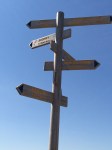
    Crossroads at the Mount of Forgiveness.
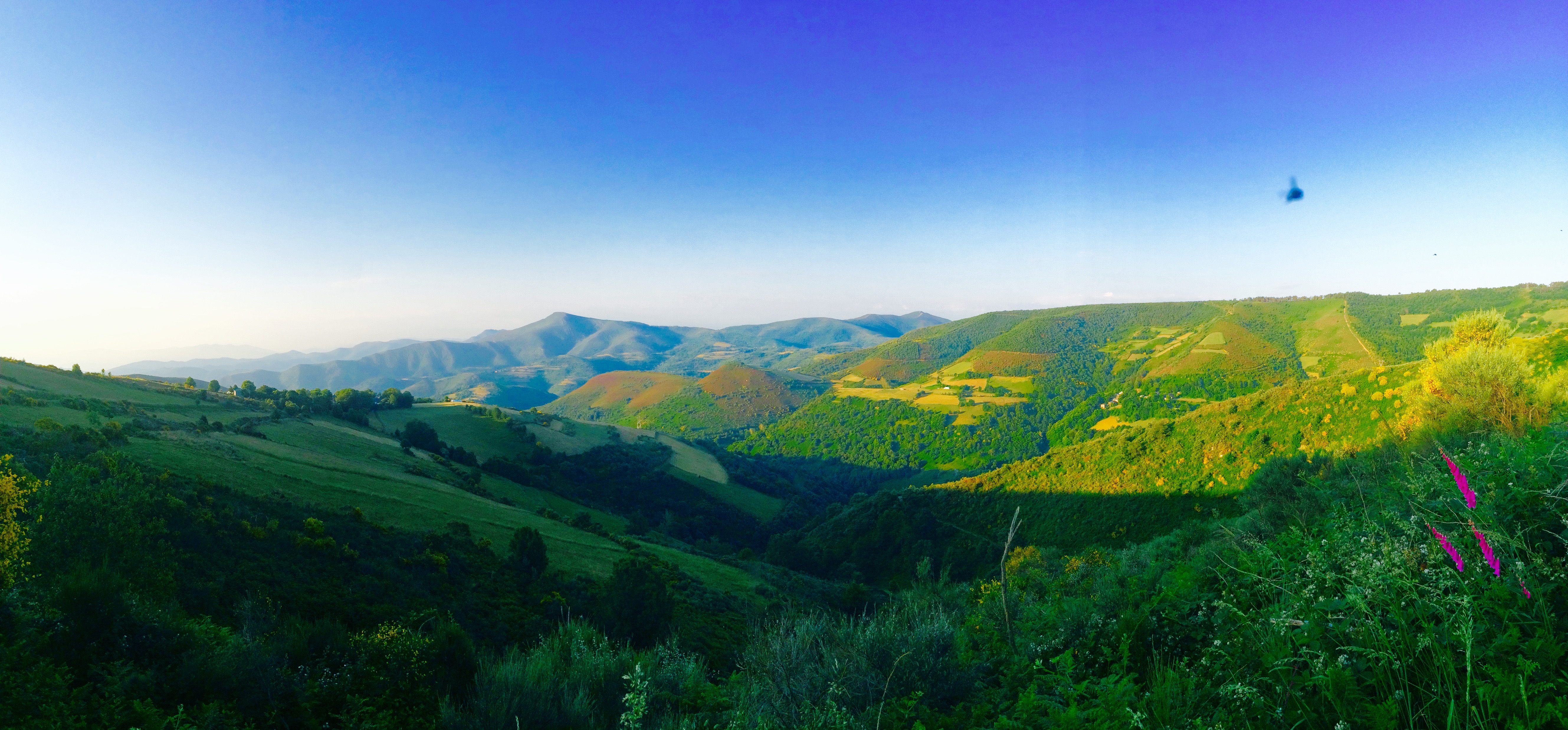
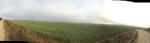
    Wheat field panorama. Approaching storm.
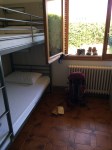
    Hostel, El Jardín de Murazábal.
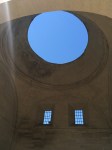
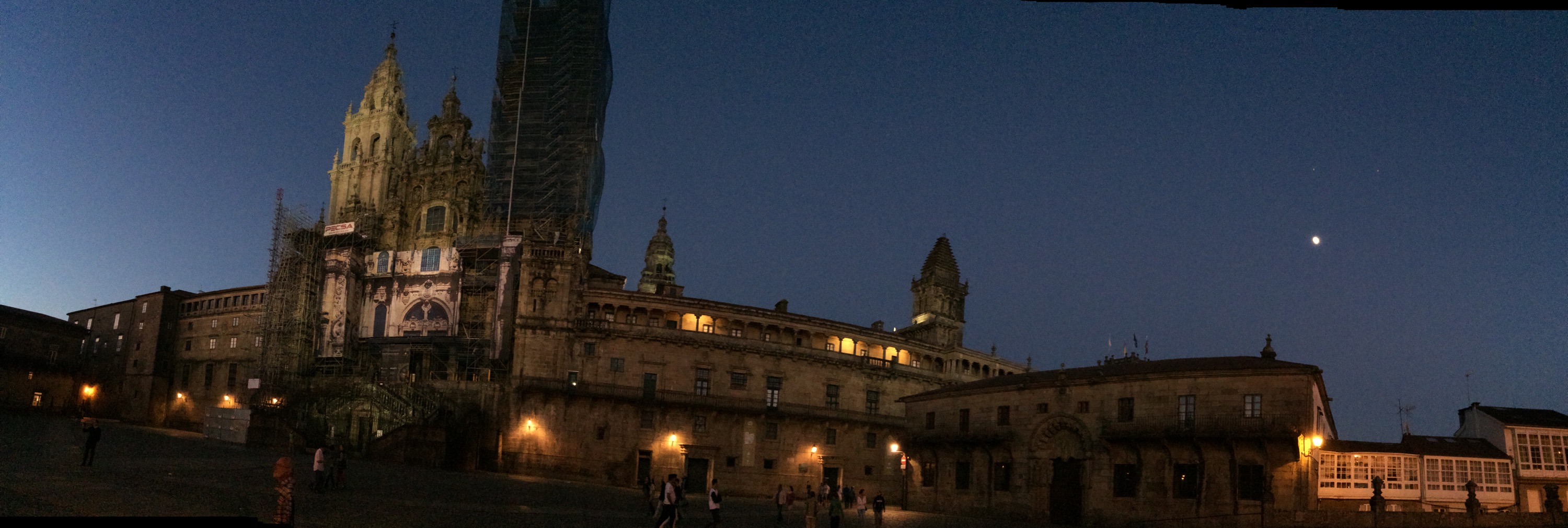
    Cathedral of the stars
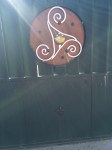
    Triskelion with scallop shell on a door.
    Old school pilgrim.
    July 5, 2015
    Camino de Santiago

  • Home

    After walking every day for a month and a half, I must admit I am addicted to the movement. I’ve never felt so good in my life. Spending at least eight hours a day outdoors, moving at a vigorous but not taxing pace, was and is the medicine I need.

    Today in Georgia it’s raining with some thunder and lightning, and I’m feeling a bit antsy from staying indoors. The sky is dark, and I’m missing the freedom I feel from being outdoors. What would I do now if I were still on the Camino? I’d put on a rain poncho and keep walking.

    One of the lessons I am learning from the Camino is that the Way doesn’t end, it only changes. It’s time to put on my boots and live the Camino as it manifests itself where I happen to be right now–in a semi tropical rain forest filled with tree frogs, cicadas, goldfinch, and chickadees.

    These little birds congregate in my front yard because of my husband’s new bird feeder. He watches them through his office window. He invites the Camino to his front door, a different way.

    Trees surrounding my back porch.
    Trees surrounding my back porch.
    July 3, 2015
    Camino de Santiago

  • Last Day in Spain

    My last big meal in Spain for 2015: salad with cheese, walnuts, and tomatoes; octopus with spicy potatoes; white wine; Santiago tart (a wedge of almond pastry topped with powdered sugar). 

    I would be in heaven if I had a place to take the siesta, but I don’t. I’m taking the night train to Madrid and will have to wait around this beautiful city of Compostela until evening. 

    Compostela, field of stars.  


    June 29, 2015

  • Day 30 of Camino, Sarria

    After leaving Leon and the meseta, which is very flat and hot, the Camino once again enters the mountains. 

    The days have been long for me, some of them nearly 18 miles with 20 lbs on my back, and often I don’t  find a hostel until 4:00.

    My routine, the same as most pilgrims, is to wake at sunrise or earlier, pack my backpack, and begin walking. If I’m lucky, the albergue provides coffee, toast, and jam, and if I planned ahead, I’ll have a banana and some juice. But sometimes I’ll walk an hour to the next town to find a cafe and some cafe con leche. And sometimes I stop for a second breakfast! 

    I usually walk for six or seven hours a day. I’m slow now, especially after nursing and mostly healing a bit of tendinitis. I stop to take pictures, drink water, or to have a snack. I really love empanadas lately. Spanish omellete is off my list–I’ve had way to much of it.

    When I reach the albergue, I find a lower bunk, get out some clean clothes, and shower. As my friend Carolina from Brazil says, “when you arrive at the end of the day you feel like a wild animal, but after a shower you turn back into a person.”

    After the shower, it’s time to wash my clothes by hand. I only have three t-shirts plus one “good” shirt to wear in the evenings, and even that is considered extravagant by the standards of some micro lightweight packers. 

    I wear the same walking pants every day, and only wash them when I find a washing machine. That might sound gross to some people, but at this point, after walking almost 500 miles, I don’t care. 

    My night pants are actually a pair of black Smartwool thermals. So basically I’m walking around town in my longjohns with a nice shirt to dress it up. 

    After I’ve  taken care of washing, I rest a bit and then go to the store to buy some snacks for the next day–almonds, prunes, healthy food. 

    Sometimes there’s a pilgrim’s mass in the town. There was one today in Sarria that I went to. The pilgrims receive a special blessing and a chance to receive a stamp on our pilgrim’s passport.

    And during the day I walk and think and go through all kinds of emotions. My emotions rise and fall like the incedible slopes I go up and down in Galicia.


    June 23, 2015

Previous Page Next Page

Blog at WordPress.com.


Loading Comments...
 

    • Subscribe Subscribed
      • Balanced On the Edge
      • Join 241 other subscribers
      • Already have a WordPress.com account? Log in now.
      • Balanced On the Edge
      • Subscribe Subscribed
      • Sign up
      • Log in
      • Report this content
      • View site in Reader
      • Manage subscriptions
      • Collapse this bar